


Pregnancy is accompanied by numerous novel sensations, and one of the most typical complaints of pregnant women is the discomfort in the abdomen. Round ligament pain pregnancy is one of the many common causes of sharp or pulling pain in the lower belly; the condition is associated with the natural extension of supportive tissues as the uterus expands. Although this kind of pain may be unexpected or shocking, it should be considered a normal condition during the changes in your body that may occur during pregnancy.
To flow through all the pangs and sufferings of pregnancy, one needs to have a clear picture of what is happening below your skin. This guide will guide you to recognize the particular triggers of ligament discomfort, the distinction between it and other more serious conditions, and offer workable solutions to relieve them on the day-to-day basis. We will also recommend some products to you, such as maternity support belts. By getting to know how to cope with these physical changes, you can pay less attention to the painful experience and more attention to the thrilling moments of your pregnancy process.
What Is Round Ligament Pain in Pregnancy
To be familiar with this pain, you must be knowledgeable of the anatomy of the uterus. The round ligaments are two appendage-like formations in the pelvis that assist in supporting the uterus by attaching the forward of the womb to the groin.
- During Pregnancy
These ligaments are normally short and firm. But, due to the enlargement of the uterus upwards and outwards, these ligaments have to enlarge considerably to support the uterus.
- The Mechanism of Pain
As soon as you move the stretched-out ligaments, the ligaments are contracted abruptly, like a rubber band being fired off. This involuntary contraction irritates the surrounding nerve fibers, creating a burst of pain of short duration and intense pain.
- Location
The pain is most commonly experienced on the right side of the lower abdomen, but it is perfectly normal to experience the pain on the left side, as well as both sides.
When Round Ligament Pain Starts During Pregnancy
Although each bodies vary, the shift of these ligaments to experience the pressure of an expanding tension of the developing uterus.
- The Second Trimester Window
During the period between weeks 14 to 26, most women start experiencing the symptoms. This is the time when the uterus will develop out of the pelvis cavity as well as into the abdomen, accommodating the biggest strain to the supporting ligaments.
- Earlier Onset
When you are carrying multiples (twin or triplets), or it is not your first pregnancy, then you might experience this pain earlier because the body grows faster or the muscles are less tense due to the earlier pregnancies.
- Length
Pain intensifies in the second trimester, but then starts to reduce as the body becomes accustomed to it, but some women feel it up until delivery.
Common Symptoms of Round Ligament Pain Pregnancy
To identify the round ligament pain among other kinds of pains, it is important to be able to identify the typical symptoms.
Common signs include:
- Stabbing, sharp, or pulling pains in the lower abdomen or groin.
- Sudden movement or change of position causes pain.
- Pain that up to a few seconds to a few minutes.
- Pain on one or both sides, which is usually more apparent on the right.
The pain is generally relieved through rest and is not accompanied by some symptoms like fever, blood, and constant cramping.
How to Relieve Round Ligament Pain During Pregnancy
The most effective way to deal with this discomfort is to combine mobility rehabilitation with external assistance. Since the pain is mechanical, it is best treated using physical adjustments.
- Move With Intention
Do not jump about. When you are leaving your bed, roll over on your sides and sit up using your arms instead of relying on your abdominal muscles.
- The Cough Tuck
The next one is the Cough Tuck, which involves trying to lean forward, bending at the hips in case a sneeze or cough is coming. This decreases the force on the ligaments, and they do not get the time to
- Use Support Wear
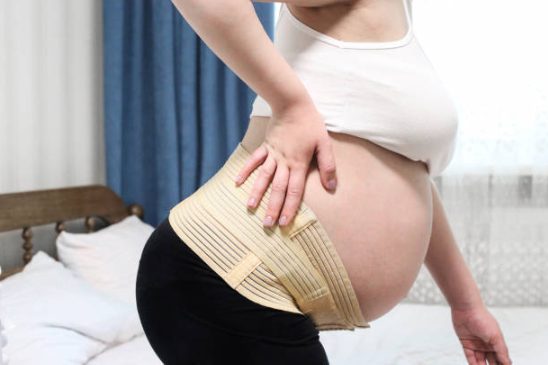
The best option is to reduce the everyday burden that your pelvis bears by buying a Momcozy belly band during pregnancy. The Momcozy belly band for pregnancy supports the lower belly in this way, the weight of the baby is redistributed, and the straining of the round ligaments is removed, giving the baby a chance to rest and allowing the muscles to relax.
- Prenatal Yoga
The ligaments can be kept soft with the Cat-Cow pose, which is a gentle stretching exercise.
- Heat Therapy
The muscles and ligaments can be calmed down with heat treatment in the form of a warm (not hot) bath or a heating pad with a low setting.
Round Ligament Pain vs Other Pregnancy Pains
One should differentiate this relatively harmless ligament stretch with other causes of pelvic pain, which may need a more specific intervention.
| Type of Pain | Description |
| Round Ligament Pain |
|
| Braxton Hicks Contractions |
|
| Pelvic Girdle Pain (PGP) |
|
| UTI Pain |
|
When to Worry About Round Ligament Pain Pregnancy
While round ligament pain pregnancy is a normal part of the process, you should never ignore symptoms that feel “off” or persist for long periods. Contact your healthcare provider immediately if you experience the following: Consult the physician in case of pain:
- Acute and failing to recover by rest.
- Vaginal bleeding or fever.
- Accompanied by dizziness, nausea or chills.
- Elastic cramping or contractions.
Final Thoughts
The round ligament pain is a normal and anticipated process of pregnancy due to the stretching and adapting of tissues to hold the uterus in place. Although it may feel stabby or even painful, it is normally short-lived and can be handled with the right aid, posture and slight movements.
Knowledge on how to distinguish between normal ligamentary pain and more severe pain minimizes unnecessary concern. Using your body as a guide and consulting an expert when something does not work, you can change pregnancy with more ease and comfort. Always remember that your healthcare provider is your best resource—if a pain ever feels like more than a simple stretch, don’t hesitate to reach out for peace of mind.
