


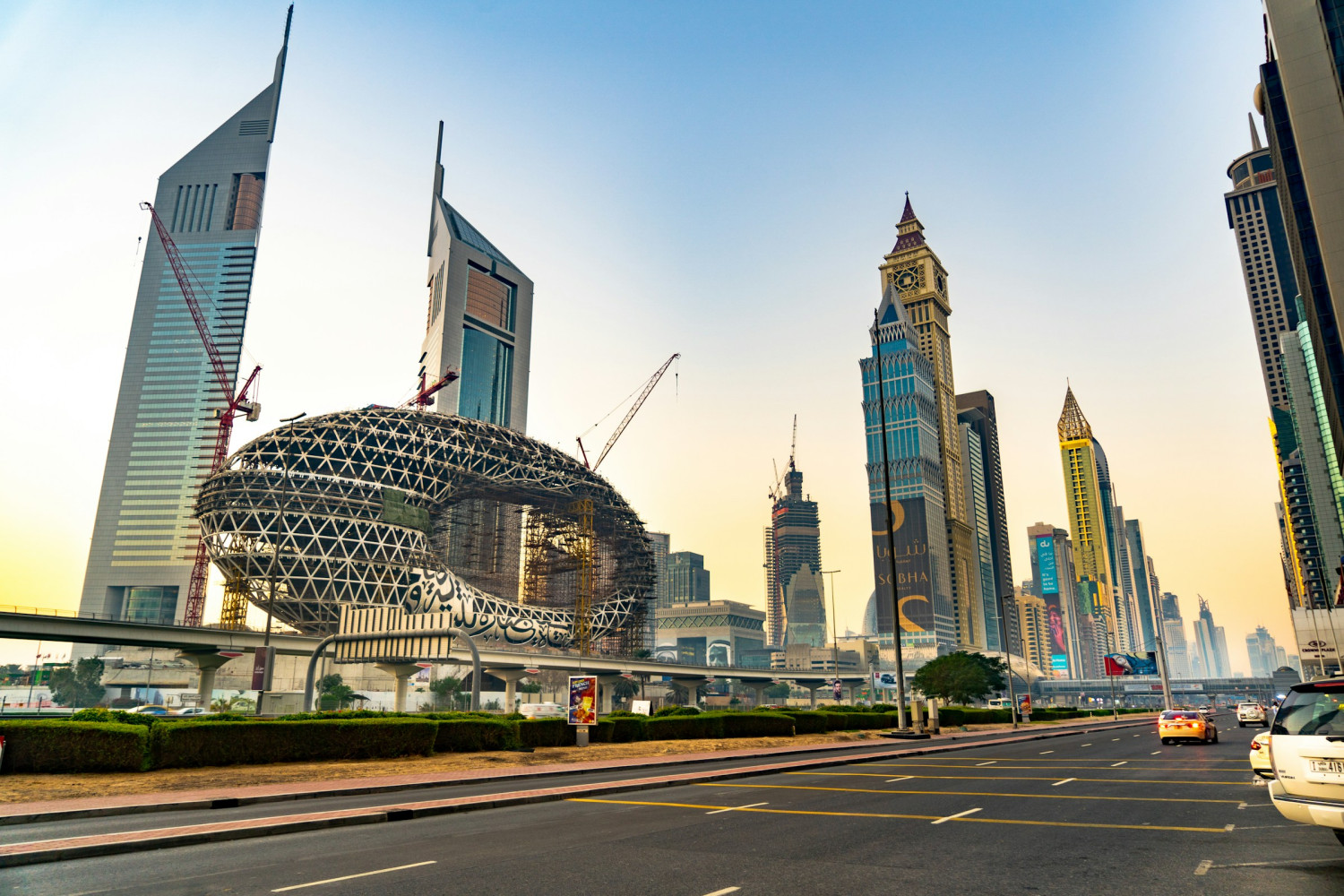
The UAE Golden Visa is a ten-year residency program that allows eligible individuals to live, work, and study in the UAE without needing a sponsor.
This long-term, renewable residence visa enables foreign talents to stay outside the UAE for more than the usual six months and includes the ability to sponsor family members, including spouses and children.
For American families, the appeal lies in timing. The dollar remains strong, Dubai’s infrastructure continues to evolve at pace, and
international schools offer an exceptionally wide range of curricula, including British, American, and International Baccalaureate programs, meaning families can almost always find a school that continues their child’s education pathway seamlessly. A growing community of Western expats has made Dubai a genuine long-term base rather than a temporary posting.
While other Golden Visa programs exist in Portugal and Spain,
the UAE version provides ten years of renewable residency with independent status, allowing visa holders to change jobs, start a company, or study without losing residency. The structure itself is distinctive. Unlike traditional employment visas that tie you to a single sponsor and require renewal every two or three years, the Golden Visa eliminates that dependence entirely.
The Property Pathway: How Most American Families Actually Qualify
For most American families, the Golden Visa pathway runs through real estate.
Property investors may obtain a ten-year Golden Visa if they own one or more properties with a total value of at least AED 2 million, and as of February 2026, the previous requirement for a minimum upfront payment has been removed, meaning mortgage-financed properties from approved UAE banks qualify.
That threshold means the first practical step is understanding what the Dubai property market actually looks like at the AED 2 million tier. The landscape of new development projects includes off-plan properties, branded Dubai residences, and established districts like Business Bay and Downtown that attract international buyers at the qualifying threshold.
One of the leading developers in Dubai, Binghatti, has built a reputation for innovative design and timely delivery, combining modern architecture, smart layouts, and flexible ownership options. Inventory in the AED 2 to 5 million range tends to move faster than buyers expect, particularly in established communities where international families cluster.
To secure the ten-year residency through property, investors must own real estate worth at least AED 2 million based on the full property valuation as recorded by the Dubai Land Department, not on down payment or mortgage value, with the minimum property investment applying strictly to the property’s DLD title deed or official Dubai Land Department valuation. Multiple properties can be combined to reach the threshold, and off-plan developments from approved developers are accepted.
The due diligence matters here. Buyers need to confirm the property is in a designated freehold zone, verify the developer’s RERA approval if purchasing off-plan, and ensure the title deed reflects accurate valuation meeting the AED 2 million mark. For families coordinating this from the United States, working with licensed advisors who understand both the visa requirements and the local property registration process significantly reduces error rates.
Beyond Property: The Skilled Professional and Entrepreneurship Routes
Eligibility categories include investors in public investments, companies, deposits, or real estate, entrepreneurs with innovative projects valued at AED 500,000 or above, and specialized talents and professionals.
Executive directors can qualify with an attested university degree, minimum five years of experience, employment contract, and a salary certificate of no less than AED 50,000.
For skilled professionals, the salary threshold is typically AED 30,000 per month, a figure that many senior managers and specialists in Dubai’s finance, technology, and healthcare sectors meet comfortably.
Doctors require approval from the Ministry of Health to practice, scientists need a recommendation letter from the UAE Council for Scientists or a Scientific Excellence Award, and inventors require a recommendation from the Ministry of Economy.
The entrepreneurship pathway requires documented innovation.
Applicants must provide a letter from a certified auditor proving the project value is no less than AED 500,000 and a letter from competent authorities or an approved business incubator confirming the project is innovative and technological or futuristic. This route appeals to American founders launching regional operations or technology ventures that can credibly demonstrate innovation through patent filings, incubator endorsement, or venture backing.
Applying Once You’re Eligible: The Actual Process
The service allows real estate investors owning property worth AED 2 million or more to apply for a ten-year renewable residence permit, with the process requiring submission of a passport, availability of an e-Certificate of Title or Title deed, a personal photo, UAE ID if any, and a copy of the current residence permit if any.
For the investor, the value of the property must be 2 million AED wholly owned by the applicant, the property may be mortgaged with a no-objection bank letter submitted indicating the paid amount and balance, and the applicant must be inside the UAE.
Once requirements are fulfilled and initial approval of the application is granted, the successful applicant receives a six-month multiple-entry visa and travels to the UAE to apply for an ID card and undergo a medical check, after which full approval is granted and the residence visa is received. The medical examination is standard and includes blood profiling, testing for infectious diseases, and a chest X-ray.
Total fees for the ten-year residency typically range from AED 5,000 to AED 7,000 per person when combining medical examination, Emirates ID issuance, and visa confirmation charges.
Golden Visa holders can issue residency permits for spouses and children, ensuring full family stability. Parents can also be sponsored under specific conditions, provided dependency certificates and supporting documentation are submitted.
What Daily Life in Dubai Actually Looks Like for American Families
Annual tuition fees range from AED 20,000 at the budget end to over AED 100,000 at Dubai’s most prestigious schools, with most established international schools charging between AED 45,000 and AED 80,000 per year depending on year group and school type.
American curriculum schools like Dunecrest American School follow US Common Core standards from Pre-Kindergarten through Grade 12 with a comprehensive AP program for senior students, making it particularly well suited to American families or those who want their children to pursue university education in the United States.
Healthcare quality rivals what families expect in major U.S. metropolitan areas.
Many hospitals in Dubai are accredited by the Joint Commission International, an internationally trusted organization that aims to ensure patient safety, maintain hospital standards, and reduce risks, and its accreditation means that a hospital will provide high-quality healthcare.
American Hospital Dubai, Mediclinic City Hospital, Aster Hospital, Zulekha Hospital, and Medcare Women & Children Hospital are among the most sought-after facilities by the international community. English is widely spoken across medical facilities, and much of the staff consists of internationally trained professionals.
Time zones present both advantages and complications. Dubai is eight hours ahead of Eastern Standard Time, which means morning calls with U.S. colleagues happen in the afternoon or evening locally. For families with aging parents or extended family in the States, the time gap requires intentional scheduling for regular video calls and holiday coordination.
The cultural adjustment is real but manageable. Dubai is cosmopolitan by design, but it remains a Muslim-majority emirate where cultural norms differ from American expectations. Dress codes are relaxed in private compounds and malls but more conservative in government buildings. Alcohol is available in licensed venues and some residential compounds, but public intoxication carries serious consequences. Understanding and respecting these norms becomes part of the family conversation early.
U.S. Tax Obligations Don’t Disappear
American citizens remain subject to U.S. tax on worldwide income regardless of where they live.
U.S. citizens and resident aliens living abroad are taxed on worldwide income, but may qualify to exclude foreign earnings from income up to an amount adjusted annually for inflation, which was $120,000 for 2023.
To claim the FEIE, taxpayers must file Form 2555 with Form 1040 and pass one of two qualifying tests: the Physical Presence Test requiring 330 full days outside the U.S. in any twelve-month period, or the Bona Fide Residence Test requiring established residence in a foreign country for a full tax year.
A U.S. person, including a citizen, must file an FBAR to report a financial interest in or signature authority over at least one financial account located outside the United States if the aggregate value of those foreign financial accounts exceeded $10,000 at any time during the calendar year reported. This requirement applies even if you owe no U.S. tax due to the Foreign Earned Income Exclusion. The filing is separate from your tax return and is submitted electronically through FinCEN’s BSA E-Filing System.
The UAE has no personal income tax, no capital gains tax, and no estate tax, which makes it attractive from a tax efficiency standpoint. But for Americans, that simply means you’re managing one tax system rather than two. Working with a CPA who specializes in expat tax ensures you’re claiming the right exclusions, filing the correct forms, and avoiding penalties that can reach thousands of dollars for non-compliance.
What Families Say They Didn’t Anticipate
The permanence question surfaces within the first year. Dubai is comfortable, functional, and easy to navigate. But it’s not home in the way most Americans define that term. The expat community is transient by nature.
Friendships form quickly but often end abruptly when contracts expire or companies relocate staff. For children, that means learning to say goodbye more often than they might in a stable suburban American neighborhood.
Repatriation planning becomes more complex the longer you stay. If children spend middle school and high school years in Dubai, their sense of American culture and geography can become abstract.
College applications require careful management of transcripts, standardized testing, and demonstrated ties to U.S. institutions if merit scholarships are in play. Some families maintain a U.S. mailing address and voter registration specifically to preserve those connections.
Banking relationships shift in unexpected ways. Some U.S. banks close accounts for customers who move abroad due to compliance burdens. Others restrict access to certain investment products or retirement accounts. Establishing banking in Dubai is straightforward with residency, but maintaining dual banking relationships requires ongoing attention to avoid account closures or service limitations.
The cost of living is uneven. Housing, schooling, and healthcare consume significant portions of expat budgets, but many families find groceries, dining out, and domestic help more affordable than in major U.S. cities. The calculation depends heavily on employer packages, which vary widely across industries and seniority levels.
What Long-Term Means When You’re Building a Life Somewhere New
Ten years is a meaningful timeframe. It’s long enough to see children through primary and secondary school, to build professional networks that matter, and to develop routines that feel permanent. But for most American families, the Golden Visa represents optionality rather than finality.
The residency structure allows for extended absences, which means families can return to the United States for summers, holidays, and family obligations without jeopardizing status. That flexibility is part of the design. It acknowledges that globally mobile families operate across jurisdictions and that rigid presence requirements would undermine the program’s intent.
What changes over time is how families define home. Dubai becomes the place where daily life unfolds. Where children go to school, where doctors know your medical history, where you know which grocery store stocks the specific brand of peanut butter your family prefers. But it rarely replaces the emotional anchor of wherever you came from. Most American families in Dubai describe themselves as living between places rather than having fully relocated from one to the other.
The Golden Visa gives you a decade to figure out which version of that story makes sense for your family. Whether that means staying long-term, using Dubai as a base for regional work, or eventually returning to the States with international experience that reshapes career trajectories and worldviews. The program doesn’t demand a permanent choice. It just opens the door and lets you walk through it at your own pace.
