


If you have a teenager in Ohio, the question of marijuana use probably feels closer than it did a few years ago.
Voters approved Issue 2 in November 2023, and legal recreational sales began in August 2024. Cannabis is easier to buy and more visible than ever. Naturally, it became a part of everyday conversation.
For a lot of parents, that shift raises a practical question: would an at-home drug test actually tell me what I want to know? Most parents who reach for a test aren’t trying to spy on their kids. They’re trying to understand a situation and figure out whether there’s something to worry about.
But home tests are useful only if you know what they do exactly, so it’s worth walking through both before you buy one.
How At-Home Drug Tests Actually Work
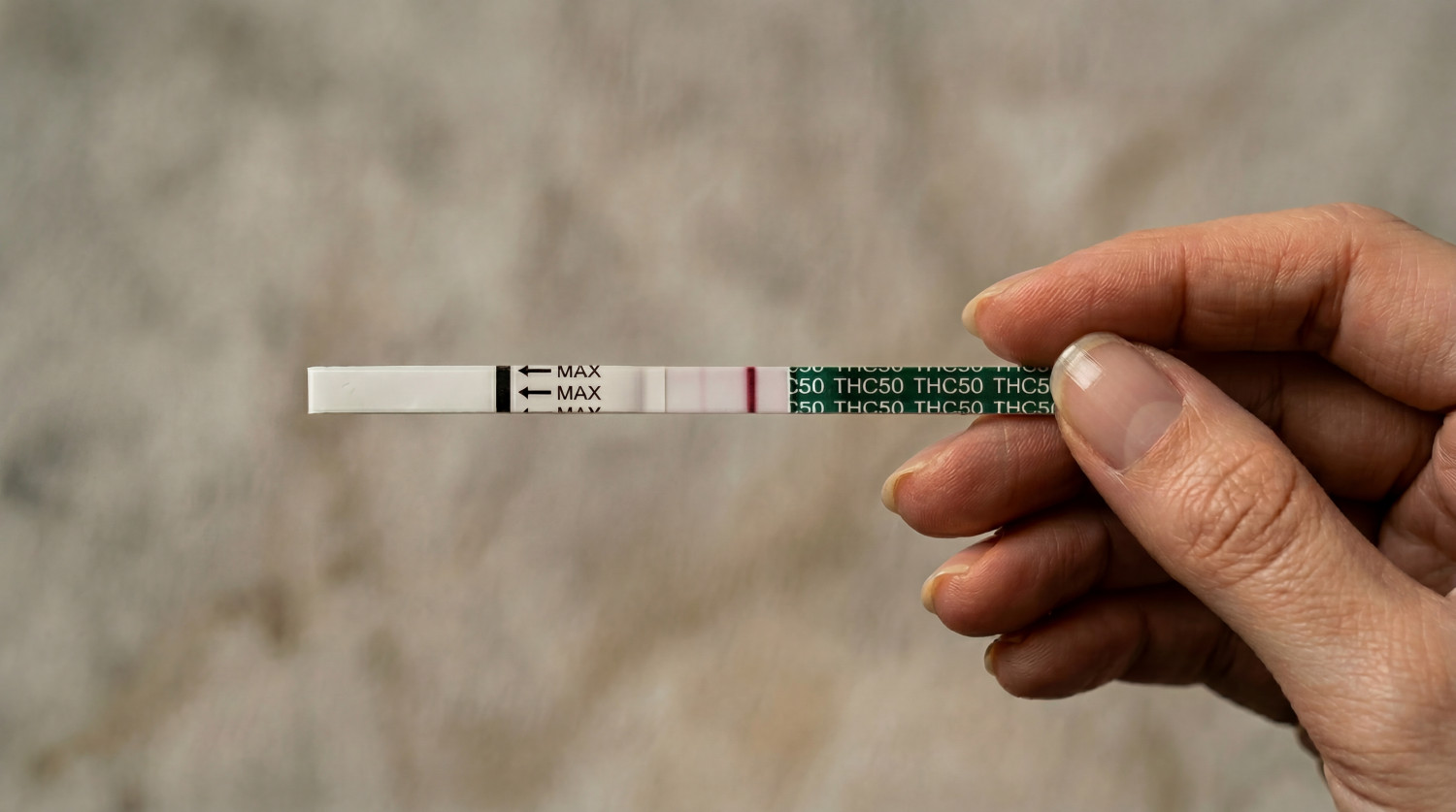
The strips and cups you can order online all work on the same basic principle. A test checks whether a particular substance, or a metabolite left after it, is present above a set level. The U.S. Food and Drug Administration describes these as qualitative tests. This means that they tell you whether or not drugs were taken, not how much is present.
This distinction is important. A home test gives you a preliminary read, and the FDA’s own guidance notes that if a screening result suggests a drug may be present, the sample should go to a laboratory for a more specific test to confirm it. A screening result and a confirmed result are two different things.
You’ll find single-substance strips for THC or nicotine, and multi-panel cards that check for several substances at once (but have separate cutoffs for each). Which one fits depends on your particular situation and what you’re actually trying to learn. If you want to dig in deeper before you make any decisions, this at-home drug testing overview is a useful starting point.
What’s a Cutoff Level?
Every test has a threshold, called a cutoff. If the test shows a positive, the substance tested is above that threshold, and vice versa. A negative result doesn’t mean there is zero substance in the sample. It means the amount present sits below the level the test is designed to flag. This is one of the most commonly misread parts of home testing.
Two people could get different results from the same test on the same day depending on timing, hydration, and how much they used. The threshold stays put at a set number even though everything happening inside the body keeps changing. The cutoff standards are set by the governmental regulatory bodies, and most at-home testing kits match them. However, for most substances, the detection windows are not that long, with the exception of THC. Speaking of detection windows…
Understanding Detection Windows
How long a substance stays detectable varies enormously. It depends on the substance itself, how often someone uses it, their body composition, their metabolism, and how much water they’ve had. For most substances, the window is short. According to the American Academy of Pediatrics, many drugs are undetectable within two or three days.
Marijuana is the outlier, and it’s the one most parents are asking about. THC is fat-soluble, which is why it behaves so differently from other substances. Research on cannabinoid pharmacokinetics shows that THC distributes widely into fatty tissue because of its high lipophilicity, so it lingers in the body long after the effects wear off. For someone using heavily, the AAP notes a positive result is possible for two to three weeks or longer, with some reports stretching to six weeks, or even longer, after they stop.
That range is so wide that no chart can give you a precise answer for one individual. If you want an estimate closer to your specific situation, a THC detection window calculator factors in usage patterns and body-related variables to narrow it down. Treat the output as an educated estimate rather than a promise, since the underlying biology differs from person to person.
What These Tests Can’t Tell You
It’s important to be aware of the limits, because misreading them is how parents draw the wrong conclusions. A home test can’t tell you when exactly someone used. Instead, it only shows whether a substance is or isn’t detectable now. It won’t tell you how much they used, or whether it was a single occasion or an ongoing habit.
A positive THC result won’t distinguish heavy use from a much smaller exposure. In the case of heavier (or prolonged) use, there are tests that have a higher cutoff, designed to tell you if the concentrations are really high.
False positives are also real. Some over-the-counter and prescription medications can trigger a preliminary positive. This is exactly why a confirmatory lab test exists. If you take a home result as a verdict on its own, you risk acting on incomplete information.
Using a Test as a Conversation, Not a Verdict
A test result is just raw data, best used with context. A positive screen tells you a substance is present above the cutoff, which is a signal worth understanding rather than a final answer on its own. It helps to be clear about when testing fits. The American Academy of Pediatrics cautions against secret, punitive testing done without a teen’s knowledge. Where an at-home test earns its place is the opposite scenario: an open, agreed-upon check-in, a teen who wants to prove they’re clean, or an adult monitoring their own use ahead of a job screen. Used with transparency, a test gives a family a concrete, private way to stay on the same page. That’s also why understanding the result matters as much as running the test. A test gives you information, and knowing how to interpret it is what makes that information worth having.
At-home testing should be an open conversation starter
At-home drug tests are affordable and easy to use, and they can give you a quick read on a specific question. They work best when you understand what they actually measure, which is a yes-or-no screen against a fixed threshold rather than the full story of someone’s use. Pair one with the lab confirmation step when a result matters, and lean on your pediatrician for the hard calls. If used correctly, a test becomes one helpful tool and a starting point towards a solution.
