


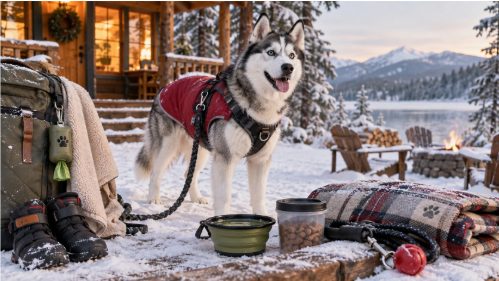
Most dog packing lists cover the obvious basics: bed, leash, bowl, treats. That’s fine for a quick overnight stay, but a family winter getaway with a dog takes a little more planning.
Whether your family is heading to a cabin in Northeast Ohio or farther afield, January can mean frozen ground, snowy paths, muddy entryways, and plenty of wet boots coming through the door.
Winter cabin trips are a different kind of family getaway. The dog is in an unfamiliar house, the outdoor space is new, and the usual boundaries from home don’t apply.
Cold weather can also create problems owners don’t always notice right away: stiff joints on the first morning, ice building up between the toes, or paws getting irritated after a snowy walk.
So this isn’t just another generic packing list. These are the practical extras that can make a winter cabin trip easier for the whole family, dog included.
1. A Familiar Bed and Blanket
Here’s something people forget: dogs orient through smell long before they orient through sight. Walking into a cabin can mean nothing familiar to them at first: new floors, new smells, and unfamiliar nighttime sounds after everyone settles in.
An old blanket can help with that. It doesn’t need to be new or fancy; a blanket that’s already spent plenty of time on the couch carries the familiar smell of home.
Pack it in the car and give your dog a quiet corner with it once you arrive. Many dogs settle more quickly when they have something familiar nearby, which can make the first evening easier for everyone.
2. A Warm Layer for Cold Outdoor Time
People assume their dog’s “built for the cold” because it’s got a decent coat, and sometimes that’s true. Sometimes it very much isn’t.
What actually gets missed is how much heat a dog loses just standing around. Not walking, standing. Sniffing a gatepost for four minutes while you wait, watching something in a field, whatever it is dogs do out there.
That’s the moment dog coats for winter walks really earn their keep, not during the brisk part of the walk, but during all the stopping and starting that winter walks often include.
Chest and belly coverage matters more than back coverage, since that’s where the cold actually gets in. Water resistance helps too, mostly so you’re not drying a soggy dog off every single evening, which gets old fast.
Not every dog needs this. A husky’s not the same animal as a whippet with basically no body fat to insulate anything. But if there’s any hesitation at the back door on a frosty morning, that hesitation is telling you something.
3. Paw Protection for Wet or Snowy Routes
This is one of the easiest things to overlook. Frozen mud, black ice you can’t even see, and salted or icy paths near cabin driveways can all be rough on a dog’s paws.
Salt especially. It’s nastier than it looks, dries the pads out, cracks the skin, and then the dog licks it off afterward and irritates its mouth too. Nobody warns you about that bit.
Reliable footwear for snowy walks sounds like overkill until you’ve actually watched a dog sit down mid-walk to gnaw ice out from between its toes. Happens more than you’d think on longer routes, particularly anywhere that’s been treated with salt or de-icer for cars.
Getting a dog to accept boots takes patience, not skill. Expect the stiff-legged, confused walk around the living room a few times before it clicks.
Practice at home first. Don’t wait until the actual trip to introduce boots, especially when everyone is already trying to get out the door for a family walk.
4. Towels for Muddy Returns
Not much to overthink here. Mud and melting snow happen, and a wet dog needs drying before it gets anywhere near a rug or couch. Keep a few old towels by the door and another in the car, because the ride home can get just as messy as the cabin.
Position matters more than people think. Right by the entrance, within arm’s reach, before the shaking even starts. Skip that, and you’re chasing a dog round a strange kitchen trying to towel it off mid-shake, which is exactly as chaotic as it sounds.
5. A Visible Leash or Light
Winter daylight disappears fast. By late afternoon it can already be getting dark, and rural roads or cabin areas don’t always have the streetlights families are used to at home. Drivers on quiet roads may not expect to see a dog near the roadside.
A reflective leash or a small clip-on collar light costs almost nothing and solves a real risk. It takes two seconds to attach. Makes a dog visible from further away than headlights alone would manage in time.
6. Food, Water, and Medication
Cabins can be a long drive from stores or an emergency vet. Bring a little more food than the trip needs on paper, along with enough medication for the full stay. Running short when the nearest vet is forty minutes away is not how anyone wants to spend a family getaway.
Water is worth thinking about as well. Some dogs are fussier than owners realize and may not drink water that tastes even slightly different, which can become a real issue quickly in freezing weather.
7. A Simple Cleaning Kit
Wipes, waste bags, and a quick paw check after every walk – that’s really the whole list. Spend a few seconds checking each paw for grit, small cuts, or ice stuck between the pads. It’s a simple habit that can save a lot of hassle later.
Bringing It All Together
None of this is complicated on its own. It just takes a little thought before the car is already loaded and you’re halfway down the highway realizing you’ve forgotten the towels.
Pack these seven things and the whole family getaway is easier: fewer muddy floors, fewer sore paws, and a dog that’s comfortable enough to enjoy the winter walks right along with everyone else.
