


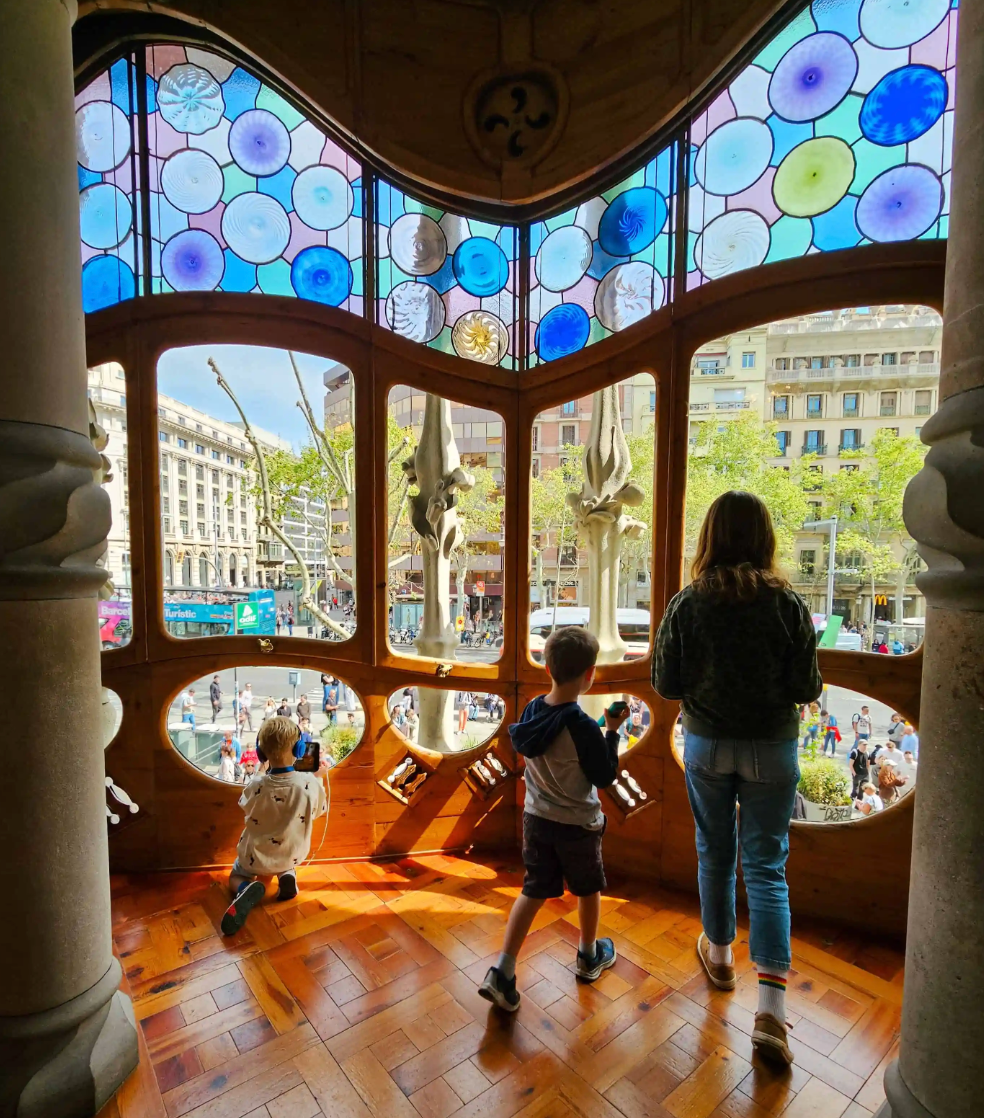
By Elodie Ferchaud, mother of four and co-founder of Boundless Life
My second child, Emi Li, has made me think about how travel can nurture a child’s creative side. As a mother of four, I love the idea that a family trip can give each child something different and that, for an art-loving child, inspiration can be found in the everyday details of somewhere new.
Barcelona is a wonderful city to explore through that lens. Creativity is something children can encounter as they walk through the city, with opportunities to explore how things are designed, made and used: a mosaic becomes a puzzle, a market sparks questions about unfamiliar foods, a neighborhood workshop reveals that making things can be someone’s livelihood.
Visiting a museum is wonderful. Giving children time to notice, ask questions and create something of their own can make the experience even richer.
Tip 1: Follow the questions, not just the itinerary
It’s tempting to measure a successful trip by how much we’ve seen. With children, it can help to slow down and follow what catches their attention.
In a city like Barcelona, that might be a mosaic, an unusual building or a shop window filled with handmade objects. A simple question – “How do you think they made that?”- can open a conversation about shapes, materials, history or the people behind the work.
You don’t need to know all the answers. Looking closely and wondering together is a valuable place to start. Giving children a sketchbook, a camera or responsibility for choosing one stop can also help them become active participants in the experience.
Tip 2: Meet the people who make things
Art becomes more tangible when children meet someone who uses creativity every day.
In Barcelona’s Poblenou neighborhood, our Boundless Life education team is exploring ways for children to learn directly from local tradespeople through a learning project called “Decent Work for All.”
The idea is simple: a professional introduces their trade and a real challenge they face. Children explore the skills involved, develop a possible solution and then receive feedback from someone who does that work every day. The possibilities bring local culture into the learning.
Younger children might work with a mosaic artist, exploring how individual pieces fit together to create a larger design. A neighborhood fruit seller could invite them to think about a practical challenge at their stall.
Children ages 8–9 might meet an espardenya maker (a craftsperson who makes traditional Catalan shoes) and explore how materials, design and function come together. Older children might work with a bicycle mechanic, consider ways to improve working conditions for market vendors or design more sustainable packaging for a chocolatier.
It shows how much a neighborhood can offer children opportunities to connect creativity with everyday life.
Tip 3: Give creativity a purpose
A real challenge adds another dimension to making something.
Packaging needs to protect the chocolate inside. A shoe needs to be comfortable as well as attractive. A market display needs to work for the person selling the produce and the customers buying it.
Children have to listen, consider someone else’s needs and explain their choices. Their first idea may need adjusting. A material might be too fragile, or a design difficult to use.
Working through those discoveries gives children a meaningful reason to persevere. Feedback from a local professional can also help them see that their ideas deserve attention and that improving an idea is part of the creative process.
Tip 4: Leave room for familiarity
What I love about longer stays – as short as one month or as long as three – is that families have time to return to the same places, recognize familiar faces and move beyond the pressure to see everything during a quick one-week stay.
Repetition has value. Visiting the same market twice lets children notice what they missed. Returning to a workshop may give a quieter child the confidence to ask a question. Sometimes, a familiar place is where a child becomes brave enough to try something unfamiliar.
Tip 5: Bring the approach home
While travel has the power to spark inspiration and creativity, it creates magic that can also be brought home. Families in Ohio can explore a local market, visit an artist’s studio or look for a hands-on workshop.
Follow your child’s interests, leave time for questions and invite them to make something in response to what they discover.
For me, one of travel’s greatest gifts is the possibility it opens up. Children encounter different ways of living, working and creating and begin to imagine where their own ideas might take them.
They may come home with a sketchbook full of drawings. They may also come home with a little more confidence in what they can contribute.
####
Elodie Ferchaud is co-founder of Boundless Life, which helps families live, work and learn together in destinations around the world. A mother of four and a former brand leader at P&G and L’Oréal, she has relocated her own family across five countries in six years.
