


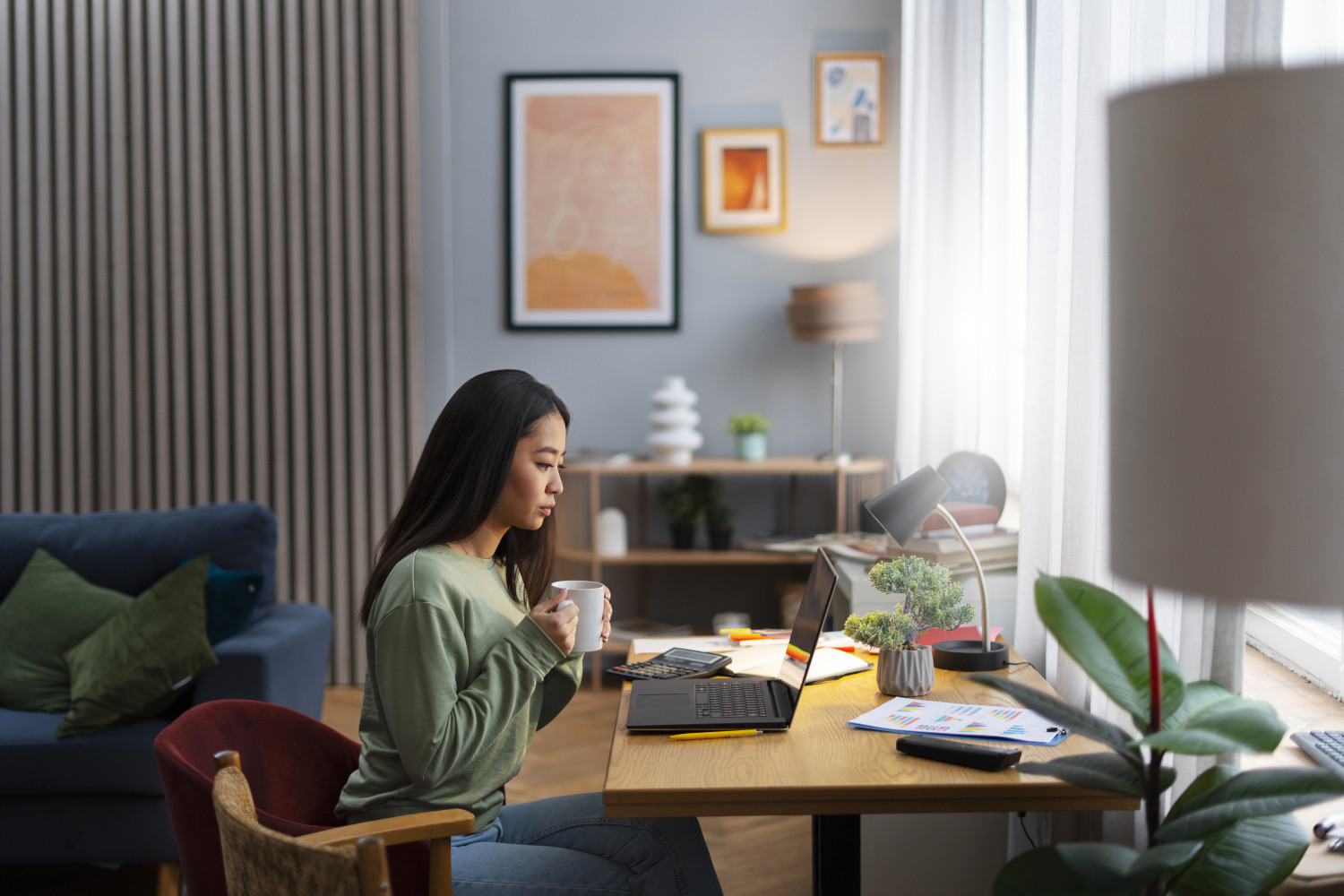
Working alongside active children makes it incredibly difficult to maintain concentration. The constant background noise of toys, televisions, and loud conversations easily derails professional tasks. Finding focus requires more than just wearing heavy headphones; it demands creating a dedicated physical space designed to block out household distractions. Parents can secure a quiet work zone by choosing low-traffic areas, implementing smart sound-absorbing materials, and setting clear visual boundaries. In this guide, we will list practical layout changes and design choices to help remote-working parents create a calm, productive environment right in the middle of a busy, loud household.
Why Focus Feels Harder at Home When Kids Are Around?
For remote-working parents, the biggest challenge involves constant context switching. When a child asks a simple question or runs past your desk, your brain completely shifts away from the professional task. Returning to that deep state of concentration takes significant time and energy.
Parents often report feeling mentally exhausted by noon because their attention constantly bounces between complex work projects and sudden household needs. You can’t ignore your family, but kids’ unpredictability makes a traditional workflow impossible to maintain without a dedicated, protective strategy for your physical environment.
Start by Finding the Least Chaotic Spot in the House
We have seen too many parents try to work straight from the kitchen island. This central location guarantees continuous interruptions from meals, snacks, and general family traffic. You must seek out the quiet zones in your house where family members rarely go during the day.
Look at the empty space inside a large walk-in closet, a distant corner of your master bedroom, or the finished area beneath your basement stairs. Choosing a location far away from the primary television and the refrigerator provides an immediate, natural reduction in daily distractions.
Small Layout Changes That Help Cut Daily Noise
Placing your desk in the wrong position amplifies the sounds of a busy household. Richard Huang, the CEO of an office pod brand, ReframSpace, explains that controlling residential acoustics requires intentionally breaking the direct physical path between the primary noise source and your work zone. Sound waves travel aggressively down open hallways and bounce directly off bare walls, turning open floor plans into echo chambers.
Try turning your chair so you face a solid wall or a window, keeping your back to the rest of the room to eliminate visual distractions. You can also slide a heavy dresser or a solid, book-filled shelf between your desk and the open door to intercept these traveling sound waves. By placing dense furniture along the sightlines of your workspace, you absorb ambient noise before it ever reaches your ears.
Set Better Boundaries Without Making the House Feel Strict
Kids struggle to understand when a parent is physically present but unavailable to play. You need to establish clear, simple rules that do not turn your home into a rigid, unforgiving corporate environment. Use basic visual cues that young children easily grasp.
Hang a simple red sign on your door during important client video meetings, or wear a specific pair of large headphones when you need absolute silence for deep work. Communicating these visual signals calmly helps kids respect your professional time without feeling ignored or punished.
Make Your Work Corner Easier to Return to Every Day
Unpacking your laptop and clearing away children’s toys every single morning drains your motivation before you even begin your tasks. You need a permanent, dedicated surface where your equipment stays right where you left it the night before.
Leaving your monitor plugged in, your notepad open, and your pens in a specific cup reduces the mental effort required to start your workday. You’ll find that when a workspace remains fully prepped, you can sit down and immediately resume deep focus during short, unexpected pockets of quiet time, like afternoon naps or independent play hours.
New text: A quiet workspace works even better when it is supported by consistent routines. Building simple habits for a healthy brain, such as focusing on one task at a time, taking regular breaks, and maintaining a steady daily routine, can help parents protect their attention and return to important tasks more easily after interruptions.
Storage Fixes That Reduce Visual Mess and Mental Clutter
A desk cluttered with coloring books and stray toys undermines a professional mindset. Visual mess directly causes mental fatigue. Take immediate control of your physical storage to separate your professional tools from everyday family items. Installing wall-mounted cabinets gives you a secure place to lock away important documents, keeping them completely out of reach from young children.
We have seen parents completely transform their workflow by simply assigning specific closed bins for work materials and enforcing a strict rule against placing household items on the desk surface. By organizing paperwork into enclosed spaces and keeping the main surface clear, you give your brain a clean environment that supports sustained concentration.
Sound Control Ideas That Do Not Require a Full Renovation
Tearing down drywall to add professional acoustic insulation can cost thousands of dollars and disrupt your entire home for weeks. Parents need immediate, practical solutions to dampen the noise of children playing.
You can drastically reduce a room’s volume simply by adding dense, absorbent materials to your hard surfaces. Sound bounces aggressively off bare floors and empty walls, creating a loud echo. Use strategic decor choices to trap those sound waves before they hit your desk and ruin your concentration.
Rugs and Curtains
Hardwood and tile floors amplify every running footstep and dropped toy. Place thick, high-pile rugs directly under your workspace to absorb this immediate ground noise. Adding a dense foam pad underneath the rug significantly increases the soundproofing effect.
For your windows, trade out thin plastic blinds for heavy, velvet blackout curtains. The thick fabric catches ambient sound waves bouncing around the room, making the overall environment much quieter.
Soft Furniture
A room filled with metal filing cabinets and glass tables creates harsh acoustic reflections. You can quiet your workspace simply by swapping hard chairs for upholstered seating. Bringing in a small, fabric-covered bench or a plush armchair gives the noise somewhere to sink into. Soft furniture acts as a massive sponge for the household, deadening the sharp sounds of kids playing right outside your door.
Bookshelves and Wall Pieces
Bare walls allow loud voices to travel freely between rooms. You can block this transfer by covering the shared walls with heavy objects. Push a tall bookshelf against the wall separating your workspace from the main living area.
Pack the shelves completely full of dense books. The irregular shapes of the book spines scatter the sound, while the heavy mass of paper absorbs the vibration. Hanging thick canvas art or specialized fabric acoustic panels also softens the room without requiring a contractor.
Doors, Dividers, and Panels
If you work in an open-concept area, you lack traditional doors to close. In these situations, we suggest setting up heavy, fabric-wrapped room dividers to block the direct line of sight and intercept traveling noise. If you do have a door, check the bottom edge. Sound easily bleeds through the open space above the floor. Sliding a heavy draft stopper under the door creates a tight seal that immediately reduces the noise from children running through the corridors.
What to Do When You Do Not Have a Separate Room?
When carving out an office inside a busy living room or bedroom, you must rely entirely on visual separation. Use a tall folding screen or a freestanding bookshelf to physically block your view of the main house. If you cannot completely block the noise, you must block the sightlines.
Working with your back to the room prevents you from watching kids play, keeping your attention locked on the screen. Pairing this visual barrier with high-quality noise-canceling headphones provides a strong, reliable defense against sudden interruptions when you lack a dedicated door to close.
Why Outdoor Work Zones Can Help Some Parents Reset?
Stepping outside the main house offers a complete mental reset. Parents thrive when they establish a physical commute, even if that commute simply involves walking across the lawn to a backyard pod or finished shed. An outdoor workspace removes you entirely from the daily chaos of the home.
You no longer hear the washing machine running or the television blaring. This total physical separation allows you to finish your professional tasks efficiently, leaving you with more patience and energy to engage with your family when you return inside.
Mistakes That Make a Small Home Feel Even Louder
Sometimes parents unintentionally amplify the noise in their house by making poor layout choices. A small floor plan naturally traps sound, but certain errors turn the space into an echoing nightmare.
Working near open staircases: Stairs act as massive vertical tunnels, carrying downstairs arguments and running footsteps directly up to your desk.
Ignoring hard flooring: Leaving tile or wood floors bare gives sound waves hard surfaces to bounce off endlessly.
Sitting near the kitchen: The kitchen produces constant, unavoidable background noise, from running water to clinking dishes and family snacks.
Leaving doors open: Failing to close hallway doors lets voices carry freely throughout the house.
Can a Quiet Corner Really Help You Get More Done?
A dedicated, silent workspace drastically improves your daily output. Many parents have reported that they finish their tasks hours earlier once they secure a private zone away from their children. When you stop losing twenty minutes trying to regain your train of thought after every interruption, your daily efficiency spikes. A quiet corner protects your cognitive energy, allowing you to enter deep focus faster and maintain that concentration much longer.
What Matters More, Privacy or Comfort?
Many remote workers prioritize buying an expensive ergonomic chair over finding a secluded spot in the house. We believe privacy must always take priority. A comfortable seat means nothing if you cannot hear your clients during an important video call because of screaming kids.
You can always upgrade your chair or add a supportive footrest later. In a busy household, securing a private area where you control the volume and manage the interruptions remains the absolute most critical step for maintaining your professional success.
The Bottom Line
Managing a career while raising kids under the same roof brings unique daily challenges, but securing a dedicated workspace makes a massive difference. We know that finding peace and quiet takes some creative thinking, especially when space feels tight.
By making smart changes to your layout and using simple sound-absorbing materials, you can easily create a space that supports your focus. We hope these strategies help you reclaim your daily routine, making your workday feel a little calmer and much more rewarding.
