


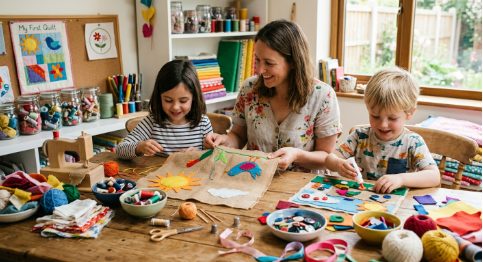
Kids are naturally curious about how things are made. Give them fabric, colorful thread, buttons, or yarn, and many will start experimenting before you even explain what to do. Sewing and textile crafts are a great way to turn that curiosity into a useful creative skill.
You also do not need to start with complicated equipment. Younger children can begin with simple hand sewing, felt projects, and fabric decorating. As their interest grows, older kids may enjoy learning about embroidery machines and tools such as embroidery digitizing software from Embroidery Legacy that can turn artwork into stitch-ready designs.
The main goal is to make the first few projects enjoyable. Kids are more likely to keep learning when they can choose colors, make mistakes, and create something they actually want to use.
Start With Simple Textile Crafts
Before teaching traditional sewing, let kids get comfortable handling fabric and craft supplies. Simple projects help them understand texture, color, shape, and basic construction without making the activity feel like a lesson.
Good beginner projects include:
- Decorating felt shapes
- Making fabric bookmarks
- Gluing fabric pieces into collages
- Creating simple bracelets with yarn
- Decorating tote bags with fabric markers
- Making small felt animals
These projects are especially helpful for younger children because they provide quick results. A child who finishes something in one afternoon is usually much more excited to try another project.
Introduce Hand Sewing First
Hand sewing is one of the easiest ways to teach how stitches work. Use a large plastic needle, thick embroidery thread, and felt or another fabric that does not fray easily.
Teach One Stitch at a Time
Do not begin with five different stitch styles. A basic running stitch is enough for a first project.
Show the child how the needle goes through the front and back of the fabric. Let them practice on scrap material before making anything important.
Once they feel comfortable, they can try sewing around a felt shape, attaching a button, or joining two pieces of fabric together.
Let Kids Choose Their Projects
Adults often pick beginner projects based on what seems easiest. However, kids are usually more interested when they have some control over what they create.
One child might want to make clothes for a stuffed animal. Another might prefer a superhero patch, small pillow, colorful bag, or decorative wall hanging.
You can still guide them toward a project that matches their skill level. Simply give them two or three realistic choices instead of deciding everything for them.
Move to a Sewing Machine Slowly
A sewing machine can be exciting, but it can also feel intimidating at first. Start by explaining the basic parts of the machine while it is turned off.
Show them where the fabric goes, how the presser foot works, and what happens when the needle moves. Older children can practice sewing straight lines on scrap fabric with close adult supervision.
Avoid starting with clothing patterns. A small pillowcase, fabric pouch, or simple tote bag usually makes a better first machine sewing project.
Explore Embroidery and Decorative Stitching
Embroidery gives children another way to combine art with textile skills. Hand embroidery can begin with simple shapes, names, flowers, stars, or small pictures.
Machine embroidery can be introduced later if you already own an embroidery machine. Kids may enjoy choosing thread colors and watching a digital design become a stitched image.
They can also draw their own ideas on paper first. This helps them understand that textile art often begins with a simple sketch before becoming something made from fabric and thread.
Make Mistakes Part of the Activity
Crooked stitches happen. Fabric gets cut incorrectly. Thread becomes tangled.
Try not to fix every small mistake immediately. Learning how to correct a problem is part of learning the craft.
If a seam is uneven but still works, consider leaving it alone. Children often care more about finishing their creation than producing something that looks professionally made.
Create a Kid-Friendly Craft Space
You do not need an entire craft room. A small table or storage bin can keep supplies organized and make projects easier to start.
Keep basic materials nearby, such as:
- Fabric scraps
- Felt sheets
- Thread and yarn
- Child-safe scissors
- Large needles
- Buttons
- Fabric markers
- Measuring tape
Keep sharp tools, rotary cutters, irons, and other potentially dangerous equipment where children cannot reach them without supervision.
Connect Sewing With Everyday Life
Kids become more interested when they understand that sewing is useful outside of craft time.
Show them how to sew on a loose button or repair a small tear. Let them help select fabric for a pillow or personalize an old shirt.
These small activities teach children that textile skills can be both creative and practical.
Keep Craft Sessions Short
Long projects can quickly turn into frustration, especially for younger children. A 20- or 30-minute activity may be enough at first.
Stop while they are still interested instead of pushing them to finish everything at once. A project can always continue another day.
Over time, children naturally develop more patience as their skills improve.
Conclusion
Introducing kids to sewing, crafts, and textile art does not require expensive supplies or advanced skills. Start small, let them experiment, and choose projects that produce something fun and useful.
The goal is not perfect stitching. It is helping children become comfortable creating things with their hands. With encouragement and plenty of room to experiment, a simple afternoon craft can grow into a hobby they enjoy for years.
Frequently Asked Questions
What age can children start sewing?
Many children can begin simple textile crafts around ages four or five. Hand sewing with large plastic needles is often appropriate once they can safely follow instructions.
Should kids learn hand sewing before using a machine?
It is helpful but not required. Hand sewing teaches basic stitch concepts, while a sewing machine introduces different skills. Both can be learned gradually.
What fabric is easiest for children?
Felt is one of the easiest options because it is easy to cut and does not fray. Cotton fabric is also a good choice once children begin practicing basic machine sewing.
How can I keep kids interested in sewing?
Let them choose projects, colors, and decorations whenever possible. Short projects with visible results usually keep children more engaged than long or complicated patterns.
Is embroidery suitable for beginners?
Yes. Simple hand embroidery is beginner-friendly and can help children practice coordination, patience, and creativity before moving into more detailed textile projects.
