


Walk into any preschool open house in Northeast Ohio, and you’ll probably hear the word “Montessori” at least once. It gets tossed around a lot, sometimes as a marketing label, sometimes as shorthand for “wooden toys and calm classrooms.” But the actual method behind the word is more specific, and once you understand it, it changes how you think about your child’s playtime at home.
Parents in Cleveland, Akron, and the surrounding suburbs have plenty of local options if they want a full Montessori education, including schools like Ruffing Montessori School in Cleveland Heights. But you don’t need to enroll your child in a Montessori school to bring the philosophy home. Understanding the core ideas is enough to start shaping how you set up play, choose toys, and respond when your toddler insists on doing something “by myself.”
What Montessori Actually Means
Montessori education comes from Dr. Maria Montessori, an Italian physician and educator who developed her method in the early 1900s while working with young children in Rome. Her core insight was simple but radical for the time: children learn best when they’re allowed to direct their own activity, at their own pace, in an environment built for their size and abilities.
That’s different from a traditional classroom model, where a teacher stands in front and delivers information to a group. In a Montessori classroom setting, the adult’s job is to prepare the environment and then step back. Materials are placed on low, open shelves so kids can choose them independently. Furniture is child-sized. Activities are designed so a child can complete them, notice a mistake, and correct it without needing an adult to intervene every time.
The result is a classroom where children move around, choose their own work, and spend long stretches of time deeply focused on something they picked themselves. It looks less structured than a typical classroom, but it’s actually built on very deliberate structure, just structure that centers the child’s own initiative instead of an adult’s instructions.
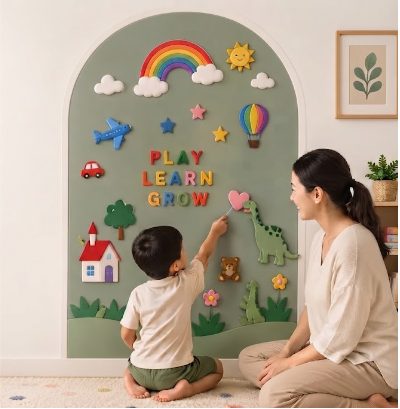
This idea of self-directed, hands-on exploration is something parents can borrow for home play, even without recreating a full classroom. Toys that are simple enough to use without help, and flexible enough to be used in more than one way, can support some of the same independent problem-solving that Montessori classrooms are designed around. Tix&Mix takes inspiration from this idea, designing Montessori-inspired magnetic play sets that give children room to explore, build, and rearrange pieces on their own terms.
Independence Isn’t Just a Buzzword
“Independence” gets used loosely in parenting conversations, but in Montessori terms it has a precise meaning. It’s not about leaving a child alone. It’s about giving them real tasks they can complete themselves, and trusting them to do it.
That might mean a toddler pouring their own water from a small pitcher, a preschooler buttoning their own coat, or an early elementary student choosing which subject to work on first. The common thread is that the adult resists the urge to jump in and finish the task, a practice Montessori educators describe as fostering student independence. Dr. Montessori’s own phrase for this was “help me to do it myself.” The adult’s role is to make the task possible, not to do it for the child.
At home, this shows up in smaller, everyday moments. Can your child reach their own snack? Can they put away toys without you sorting the bin first? Can they play with something without you narrating every step? Each of these is a small independence-building opportunity, and they add up over time.
Why Purposeful, Screen-Free Play Fits This Model
A lot of modern kids’ entertainment is built to hold attention, not to build skills. Screens are engineered to keep a child watching, which is the opposite of the Montessori goal of a child directing their own activity with intention.
Purposeful play looks different. It has a beginning, middle, and end that the child controls. Building a tower, sorting shapes by color, or fitting pieces together toward a shape a child has in mind all require planning, adjusting, and evaluating, skills that passive screen time doesn’t ask for. This is part of why screen-free play shows up so often in early childhood development conversations, and why it’s a value many Northeast Ohio families are actively trying to protect at home.
None of this means screens are forbidden or bad in every context. It just means that unstructured play time benefits from being genuinely unstructured: no screen setting the pace, no built-in reward loop pulling attention along. When a child sits down with open-ended materials and has to figure out what to do next, that’s purposeful play doing its job.
What This Looks Like in a Real Living Room
Montessori principles can sound abstract until you translate them into an actual afternoon. Here’s what a Montessori-informed approach to home play tends to include:
Low, visible storage
If a toy is in a closed bin on a high shelf, a toddler can’t choose it independently. Open shelving at child height changes that.
A limited toy rotation
Offering a manageable selection may make it easier for some children to choose an activity and engage with it.
Materials with more than one use
Toys that can be built, rebuilt, and rearranged in different ways support longer, more independent engagement than toys with only one function. Northeast Ohio Parent’s roundup of preschool toys to try is a good place to start if you’re not sure what fits this description.
Time to Work Through Challenges
If a piece doesn’t fit or a tower falls over, resist stepping in immediately. That moment of figuring it out is where the learning happens.
A Calm, Low-Pressure Setting
Independent play needs space to unfold without constant questions or praise interrupting the flow. For kids who need more sensory input to settle into focused play, this list of sensory-friendly gifts includes additional options worth considering.
None of this requires special training. It’s mostly about setting up the environment and then giving the child room to work, which, not coincidentally, is the same instruction Montessori gives to teachers.
Signs Your Child Is Already Building These Skills
Parents sometimes worry they need to overhaul their whole home to “do Montessori right.” In practice, most families already see glimpses of this kind of independent play without naming it. A child who lines up blocks by size, insists on choosing their own outfit, or spends twenty quiet minutes rearranging a shelf of toys is practicing exactly the kind of self-directed focus Montessori classrooms are built to support.
The goal isn’t perfection. It’s noticing those moments and giving them a little more room, whether that means adding a few open-ended toys to the rotation, clearing a shelf so your child can reach their own materials, or simply resisting the urge to redirect play that looks a little repetitive but is clearly holding their attention.
Bringing It Into Your Family’s Routine
If you’re looking for a starting point, don’t aim for a full classroom replica in your living room. Pick one or two ideas and try them for a couple of weeks:
Small, consistent changes tend to stick better than a dramatic overhaul, and they give you a chance to see what actually resonates with your child’s temperament.
The Takeaway
The Montessori method isn’t a specific toy or a certain brand of furniture. It’s a way of thinking about how children learn best: through hands-on exploration, real independence, and purposeful activity they direct themselves. Whether or not a Montessori school is part of your family’s plan, these same principles can shape everyday play at home, one shelf, one toy, and one quiet afternoon at a time.
