


Progress, progress, progress!
“If you enroll your child in the right school, you’re going to see unbelievable growth and gains socially and academically,” says Erica Richley-Duda, MSEd, LPCC-S, CCTP, executive Director of Special education for Summit Academy Schools, which specialize in serving children with special education needs.
She says academic growth, a positive attitude and a desire to go to school will follow suit for a student enrolled at the right school.
Part of finding the ideal school involves having a clear understanding of a child’s needs.
An Individualized Education Plan, or IEP, should paint a vivid picture of a student’s strengths and areas of need, Richley-Duda explains. With that information in hand, she advises parents to schedule visits to prospective schools. Meet with the principal or director, special education director and/or guidance and ask these key questions.
What programming is in place to address the needs of students like my child?
Identify your child’s needs and seek programs that align with them, Richley-Duda suggests. For a child with autism, a school program checklist might include sensory aids, social skills training, and visual, nonverbal and verbal supports, she says.
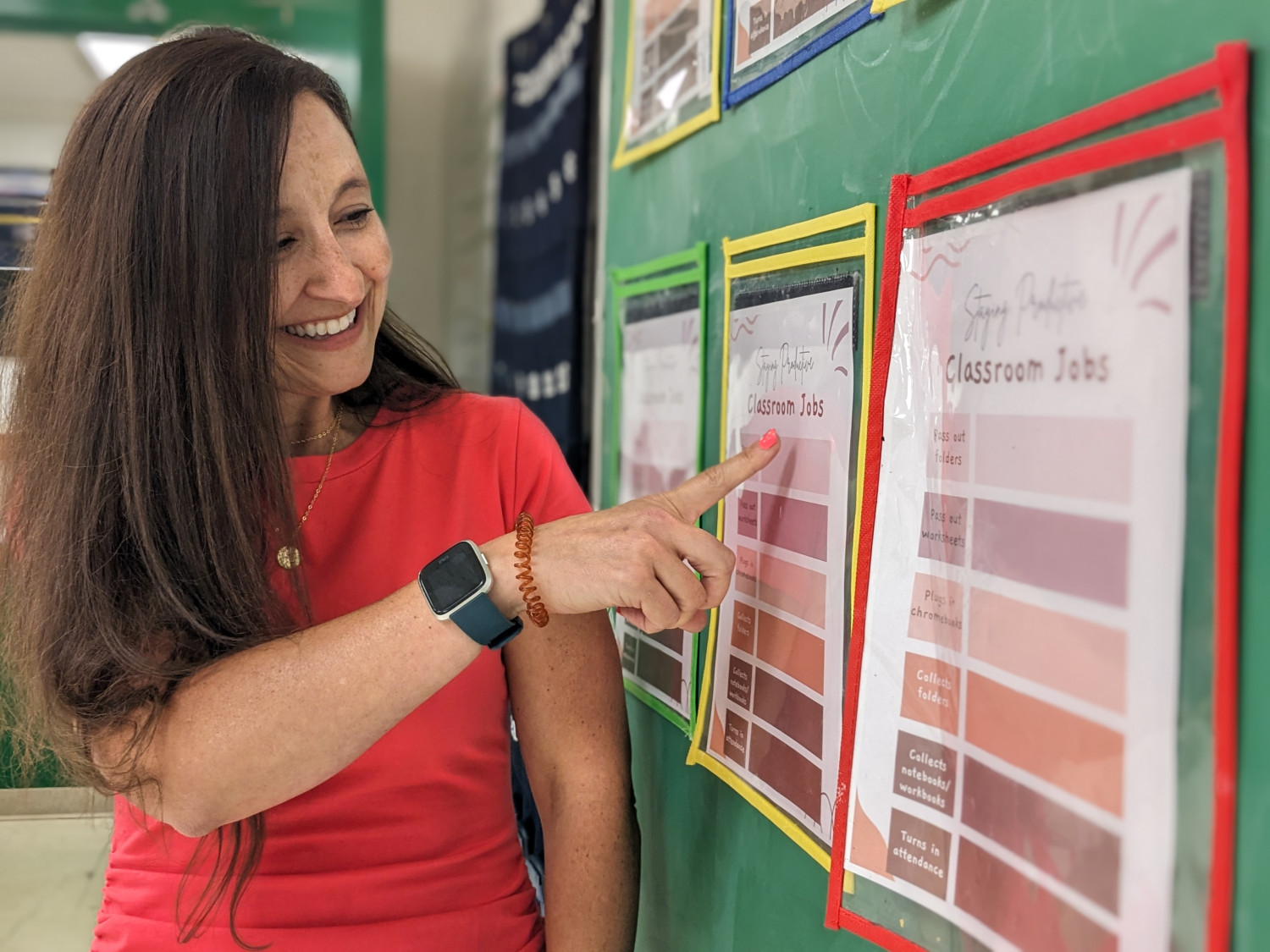
Using the example of a Summit Academy elementary school in Warren with a structured school routine, taped lines can be found streaming along hallway floors to show students where to walk and expectations are posted on colorful wall signs.
Richley-Duda says the predictability built into those enhancements is a key benefit for a child with autism.
“When children step out of a classroom, they know exactly where to go and what to do. They even sing the school rules,” she says.
Conversely, nonverbal students will benefit from assistive technology and apps as well as picture cards that communicate everything from classroom lessons and rules to breaks.
Programming might look a little different, depending your child.
“What are modifications commonly offered to students?,” Richley-Duda says, referring to what questions to ask. “Is there instruction in daily living skills? Does the school offer life and job skills curriculum?”
What is distinctive about your school system in comparison to other schools to address the needs of students with disabilities?
Look for a school’s special offerings or willingness to incorporate supports tailored to help your child specifically, Richley-Duda says.
For a child who struggles to regulate their emotions and behavior, Richley-Duda uses the example of a Summit Academy elementary school that supplies a tent for a student with significant behavioral needs. A brief retreat in this quiet private space makes all the difference.
What training is in place for staff to address the needs of students with disabilities?
School staff members should have specialized training that pairs with your child’s needs.
For children with problematic behavior, for instance, seek a school with staff members who are trained in restorative practices and trauma-informed teaching, Richley-Duda says. For a child with autism, make sure the staff have training specific to autism. Otherwise, an uninformed teacher could wrongly misinterpret aggression or other unacceptable behavior as a disciplinary issue.
If a child has behavioral concerns, look for a school that has a mental health professional or a “level” system in place. Under a level system, for instance, students level up to gain more privileges as they present positive behavior.
In the same light, staff members trained in special education will be mindful of a child’s physical distance needs and even verbal phrasing.
“A clinician with training based in mental health brings another layer of looking at ADHD, trauma, autism, mood disorders and other conditions from a deeper perspective. They have in-depth training to get to the root of what is preventing a student from learning so they can adequately address their needs so the student can actually learn,” Richley-Duda says.
What do your classrooms look like?
“Again, it comes down to the students’ needs,” says Richley-Duda. “This could look different for each child.”
For a student with autism, a low teacher-student ratio will likely benefit the child as well as an area in which to take a break for students who become overloaded. Likewise, children might need visual aids to remind them of routines and expectations, Richley-Duda says.
She advises parents to inquire about classroom supplies and furnishings that will support a child’s particular needs.
Such items could range from flex seating for students who need body movement to stay focused to trampolines and medicine balls for those who need outlets for releasing physical energy. Beanbag chairs provide spots to recenter while fidget items can help children deescalate.
“Parents are becoming more informed advocates for their children and schools are rising to the occasion for students with special education needs,” Richley-Duda says. “The individual classrooms, the overall school culture, and the tremendous amount of time a child spends with teachers and staff will have an impact one way or another. Getting it right is so important.”
Denise Henry, Summit Academy Schools linktr.ee/
