


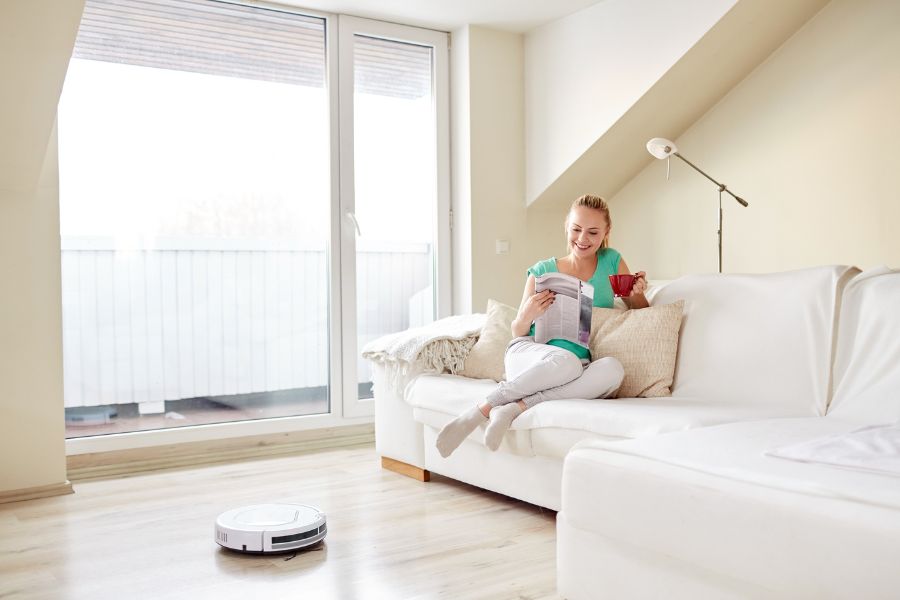
A robot vacuum can make a noticeable difference in homes where allergies are a concern. While it doesn’t replace medical treatment or eliminate every allergen, regular use can reduce daily exposure to dust, pet dander, pollen, and other irritants.
Allergens build up quickly, especially in homes with pets, carpets, or open windows. These particles settle on floors and are stirred back into the air with everyday movement.
Consistent floor cleaning helps keep symptoms more manageable, and a robot vacuum makes it easier to maintain that routine without extra effort.
Below, we’ll look at how allergens accumulate indoors, how robot vacuums help reduce them, and what features to consider for an allergy-prone home.
How Allergens Build Up Indoors
Even in clean-looking homes, allergens are constantly present.
Dust and Dust Mites
Household dust is a mix of dead skin cells, fibers, soil, and microscopic debris. Dust mites thrive in this environment, particularly in carpets and rugs. As people walk across the floor, particles become airborne again and can trigger sneezing, congestion, or itchy eyes.
Pet Dander
If you live with cats or dogs, pet dander is one of the most common indoor allergens. Dander consists of tiny skin flakes that settle on floors, furniture, and bedding.
It’s lightweight and easily disturbed, which makes frequent removal important.
Pollen Tracked Indoors
Pollen doesn’t just stay outside. It clings to clothing, shoes, and pets. Once indoors, it often settles onto floors and gets redistributed throughout the home.
Because floors act as a collection point for many allergens, consistent vacuuming can reduce how much of this material remains in circulation.
How a Robot Vacuum Helps Reduce Allergens
A robot vacuum supports allergy control mainly through consistent, frequent cleaning, stirring up less dust during cleanups, and reaching under furniture more easily.
1. Frequent Cleaning
Most people only vacuum manually once a week, sometimes less. A robot vacuum can be scheduled to clean daily or several times a week without extra effort.
Some advanced robot vacuums, like these models, empty their dustbin into a self-empty station, which makes it easier to keep a consistent cleaning routine with minimal effort.
When allergens are removed before they build up, there’s less material available to become airborne. Over time, this can lower overall exposure in the home.
2. Less Dust Stirred Into the Air
Because robot vacuums work close to the floor and rely on steady suction, they tend to lift dust directly into the unit rather than stirring it into the air like sweeping or shaking rugs. Many models are also designed to trap particles inside the system instead of releasing them back into the room.
3. Coverage Under Furniture
Beds, sofas, and cabinets collect dust in areas that are easy to ignore during manual cleaning. A low-profile robot vacuum can reach these spaces more often, reducing hidden buildup.
What to Look for in a Robot Vacuum for Allergy-Prone Homes
Not all robot vacuums are equally effective at managing allergens. If allergies are a concern, look for strong filtration, powerful suction, a sealed dust bag, and smart self-empty stations that help control dust during disposal.
Effective Filtration
High-efficiency filtration is one of the most important factors. Look for a system designed to capture fine particles, not just visible debris.
A quality filter should trap small dust and dander particles and prevent them from escaping back into the air. A well-designed internal airflow system also helps ensure that suctioned particles stay inside the dustbin.
A Well-Sealed Dust Path
Even strong suction won’t help if the dust path isn’t sealed properly. Gaps in the design can allow fine particles to leak out.
A well-sealed system ensures that air flows through the filter before being released, reducing the chance of allergens recirculating.
Dust Control When Emptying
Emptying the dustbin can expose you to a concentrated burst of allergens. For allergy-sensitive households, robot vacuums with self-emptying stations can reduce direct contact with collected debris.
Some systems are designed to seal dust inside a disposable bag during transfer, limiting how much dust becomes airborne. This feature can be especially helpful if you vacuum daily.
Strong Pickup on Carpets and Hard Floors
Allergens behave differently depending on the surface type.
- Hard floors: Dust and pollen tend to sit on the surface, making them easier to pick up.
- Carpets and rugs: Particles can work deeper into the fibers, which makes them harder to remove.
Look for a robot vacuum with enough suction power and brush design to agitate carpet fibers effectively. Consistent performance across both surface types ensures that allergens are removed rather than just shifted around.
Smart Scheduling and Routine Support
Consistency matters more than occasional deep cleaning. Choose a robot vacuum that supports daily or multi-day scheduling, zoned cleaning for high-traffic areas, and automatic return to the dock to recharge.
Smart mapping features can also help ensure complete coverage rather than random movement. The easier it is to maintain a routine, the more effective allergen control becomes over time.
Practical Tips for Using a Robot Vacuum to Support Allergy Control
A robot vacuum works best as part of a broader allergy-control routine.
In homes with pets or more severe allergies, daily cleaning is ideal, and running it every other day can still reduce buildup.
Filter upkeep matters too, so clean or replace filters as recommended since a clogged filter can reduce efficiency and may let fine particles escape.
Since floors are only one source of allergens, pair vacuuming with habits like washing bedding in hot water, using doormats, and keeping windows closed during high pollen seasons to further reduce exposure.
Final Answer: Can a Robot Vacuum Help with Allergies?
Yes, a robot vacuum can help with allergies at home. By making frequent, consistent floor cleaning easier, it reduces the buildup of dust, pet dander, and pollen over time. While it won’t eliminate allergens entirely, it can lower everyday exposure and support a cleaner indoor environment.
For allergy-prone households, focus on effective filtration, a sealed dust system, controlled emptying, strong surface pickup, and reliable scheduling. With the right setup and regular maintenance, a robot vacuum can become a practical tool in managing indoor allergens more effectively.
