


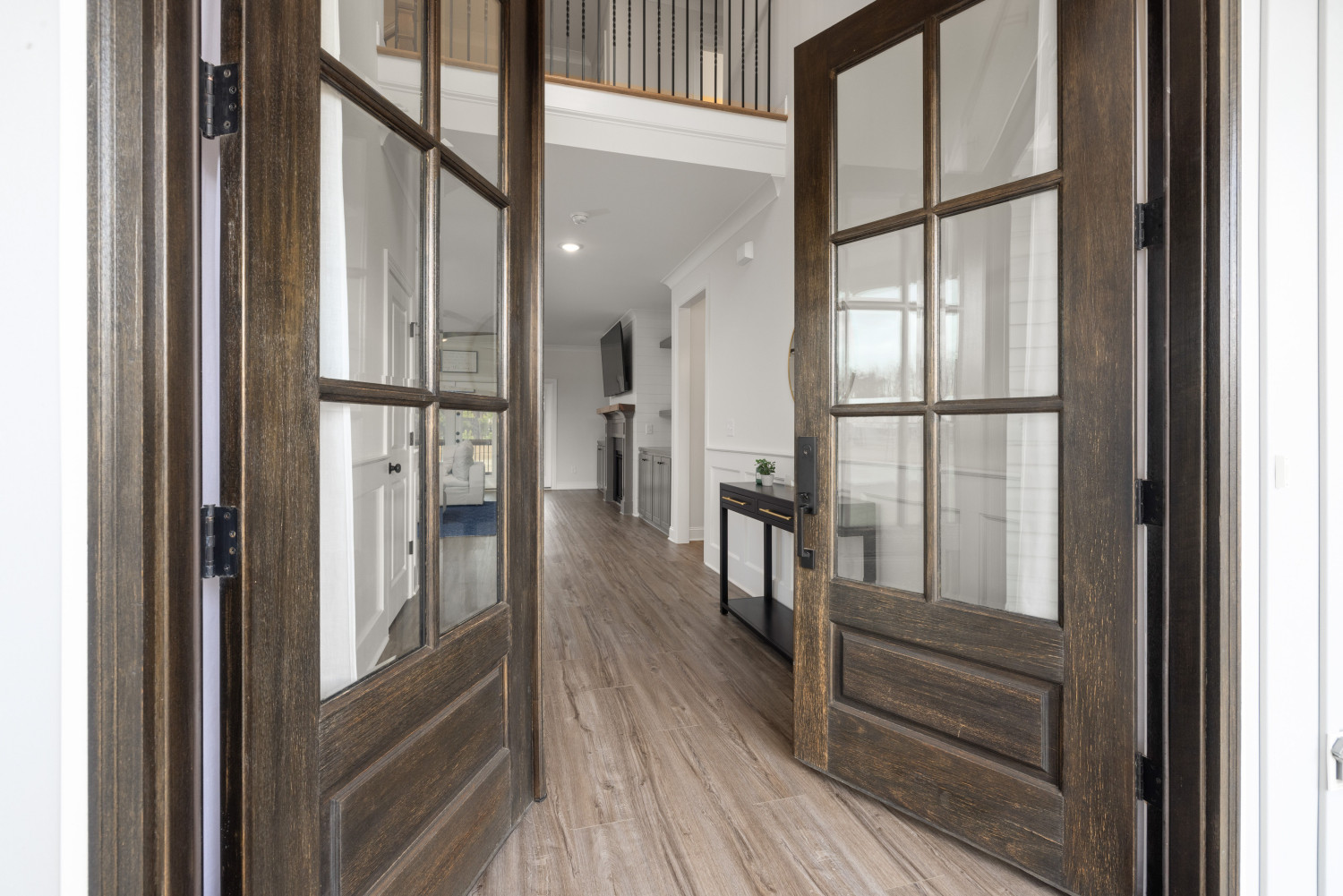
Most families replacing flooring start with the living room. It is the room guests see, the room in the photographs, and the room where the budget tends to go.
In Northeast Ohio, that is usually the wrong order.
The living room takes ordinary wear. The twelve feet inside the back door takes five months of snowmelt, road salt, wet boots and whatever the driveway contributed, and it takes it every single winter.
Here is the case for reversing the priority, and what actually survives the freeze-and-thaw cycle that defines flooring life in this part of the country.
The Cycle Local Floors Have to Survive
Northeast Ohio puts flooring through something a mild climate never does.
From roughly November to March, the furnace runs almost continuously. Indoor air gets very dry, and wood loses moisture and shrinks. Gaps open between boards.
Then summer arrives with genuine humidity, the wood takes moisture back on, and those gaps close again. Sometimes they close with pressure, which is how edges get crushed.
The household target is worth knowing, because it is what limits the swing. The EPA recommends keeping indoor humidity between 30 and 50 percent, and suggests checking with an inexpensive moisture gauge from a hardware store.
Most Northeast Ohio homes sit well below that in February and above it in July without any intervention at all.
There is a separate consideration in this region’s older housing stock. HUD renovation guidance notes that in dwellings built before 1978, sanding or scraping paint can create a lead dust hazard, and lists abrasive machine removal among prohibited methods.
For families in Cleveland’s older neighborhoods, that matters before any refinishing work starts, not after. Testing first is inexpensive and it changes what a project involves.
What Flooring Installation Cleveland Families Should Prioritize
The order of spending is where most households get better value than they expect.
50Floor’s Cleveland page covers the metro with in-home sample consultations, and for flooring installation Cleveland households are planning, the useful approach is to treat the entryway and mudroom as a separate specification rather than continuing whatever runs through the rest of the house.
That single decision does more for how a floor ages than any upgrade in the living room.
Practically, it means asking for a waterproof material at the door and accepting a different look there. A transition strip between two materials is a small aesthetic compromise. A swollen, delaminated laminate edge by the back door is not.
Seeing samples in the actual light of the actual room helps here too, because entryways are usually the darkest space in the house and materials read differently in them.
Room by Room, for a Family With Kids
The priorities shift by room more than most flooring advice acknowledges.
Entryway and mudroom. Waterproof, non-slip when wet, and dark or patterned enough to hide salt residue. This is the highest-stress flooring in a northern home and deserves the best material in the house.
Kitchen. Spills and dropped dishes. Luxury vinyl plank performs well and is forgiving underfoot.
Playroom or family room. Where the safety question actually lives. Softer surfaces reduce the impact of ordinary falls, and low-pile carpet or cushioned vinyl both help. Hard tile is the least forgiving choice for a room where small children spend hours on the floor.
Bedrooms. The most stable, driest rooms in the house. Carpet performs genuinely well here and this is where families can spend less.
Basement. Below grade means ground moisture year round regardless of the weather outside. Waterproof only, over a moisture barrier.
Stairs. Traction matters more than appearance. Whatever goes on stair treads should be secure, non-slip and consistently installed on every step.
The Cleaning Reality
Every parent has been sold flooring on the basis of how easy it is to clean. Some of that holds up and some does not.
What genuinely helps: hard surfaces in eating areas, waterproof materials where water lands, and a color that is neither very dark nor very light. Mid-tone patterned surfaces hide more than either extreme.
What does not help: high-pile carpet anywhere food travels, glossy finishes that show every footprint, and very pale flooring in a house with a north-facing entrance in March.
There is a health argument for keeping humidity in check too. WHO guidance in the NCBI library notes that dust mites require relative humidity above roughly 45 to 50 percent, which is one reason damp carpet and persistent summer humidity are worth managing in a house with allergy-prone children.
Winter salt deserves its own note. It is abrasive, it tracks everywhere, and it damages finishes over time. A large mat outside, a second one inside, and a boot tray absorb more damage than any flooring upgrade.
Where Water Problems Hide
Before replacing anything, it is worth knowing whether there is a moisture source rather than just a moisture symptom.
EPA mold guidance treats whether building materials have been wet more than 48 hours as a central assessment question, alongside hidden water sources and humidity high enough to cause condensation.
Forty eight hours passes quickly. A slow leak under a dishwasher or behind a toilet meets that threshold long before anyone notices a problem.
In older homes, the layers underneath also warrant care. Archived EPA guidance lists resilient floor tiles in vinyl, asphalt and rubber, and the adhesives used to install them, among materials that may contain asbestos, with instructions not to saw, sand, scrape or drill them.
Neither of these is a reason to avoid replacing flooring. Both are reasons to find out what is there before the demolition starts.
The Practical Summary
Specify the entryway separately and spend there first. It is the room doing the hardest work in this climate.
Run a humidity gauge through a full year before assuming a wood floor will behave.
Choose softer surfaces where children actually play, and hard surfaces where they actually eat.
And get the subfloor and the moisture question answered before choosing a material, because in a region with this much seasonal movement, what is underneath decides how long the surface lasts.
