


Shrieking skeletons, spooky music, flashing lights, smoke machines, and itchy polyester
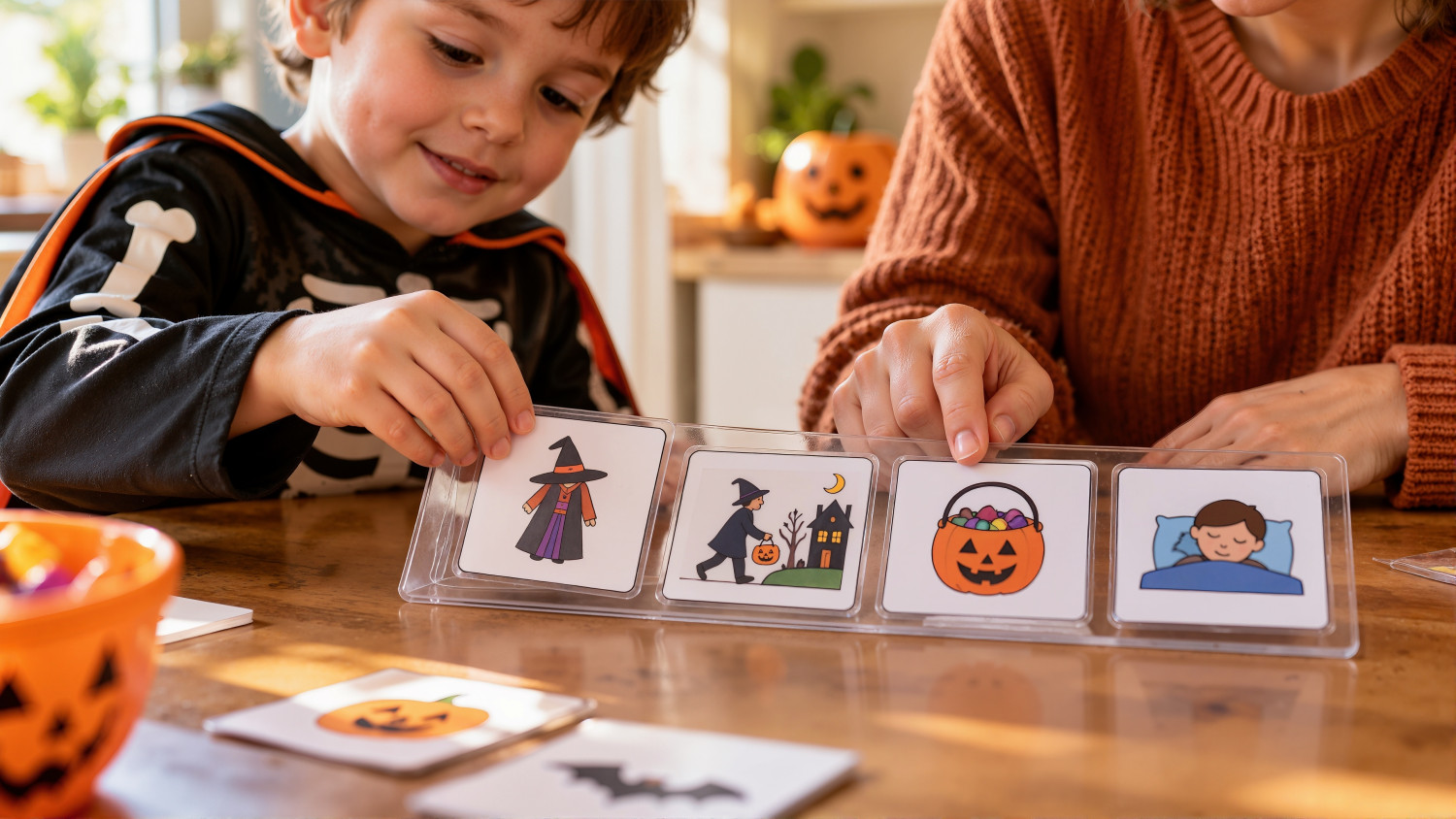
1: Help your child get ready for the holiday by creating a personalized Halloween Social Story. A social story is a description, often with visual aids, that walks through an activity or event step by step, explaining what to expect.
2: Practice saying “trick or treat” and “thank you” in a way that works best for your child. Whether they point to a sign, press a recordable talking button, or do a fun dance, help them get excited to knock on doors.
3: Have your child try on their costume, even if just for a short while, to help them get comfortable with it before wearing it on Halloween night.
4: Plan your route. It can help to create a visual schedule or map that includes photos.
5: Decide the treats that are okay and how you’ll manage the candy on Halloween, and clearly communicate this to your child.
6: Practice trick-or-treating in the house with help from Hopebridge’s printable on-and-off lights found in the 2026 Halloween guide. Hang the light printouts above or next to two separate doors in your house. Use the “lights” to help your child differentiate which is the appropriate house to approach (light on means knock, light off means skip).
7: Walk through the trick-or-treat area, practicing staying together by holding hands or using a wagon. You can make note of any houses or areas you might want to skip.
8: Enjoy reading a Halloween book or creating a Halloween craft together.
9: Practice knocking on a neighbor’s or family member’s door to trick-or-treat. Use this time to talk about why it’s safe to do this only on Halloween and only with a caregiver.
10: Host a dress rehearsal with your child’s full costume, treat bag, communication devices, and any other tools they’ll use on Halloween.
