


Your child has been referred for an OT evaluation, it is normal to feel nervous, excited, or even unsure. What should you expect before bringing your child in for their evaluation?
What is Occupational Therapy?
Occupational therapy looks at a person’s ability to engage in meaningful daily activities. For your child, this can include getting dressed, brushing their teeth, making friends, interacting with peers, playing, eating, and overall participation in family, school, and community events. An OT evaluation is an opportunity for the practitioner to learn about your child, identify not just challenges, but strengths and interests, as well as recognize what is important to your child and your family.
What skills does OT address?
Self-Care Skills: Getting dressed, potty training, brushing teeth, eating and sleep.
Sensory Processing: Addressing sensory processing challenges that impact participation in daily life, such as tolerance to certain textures, bright lights, and loud sounds. This can also include regulating the body to increase attention and safety.
Fine Motor Skills: Holding writing utensils, managing clothing fasteners, cutting with scissors, and manipulating small toys and objects.
Social and Play Participation: Taking turns, interacting in groups, and participating in play with peers
Gross Motor Skills: Increasing balance, coordination, and body awareness.
Executive Functioning: Increasing attention, planning and ideation, and direction following.
Visual Perceptual Skills: Copying and identifying shapes and letters, recognizing patterns, increasing visual attention.
What will happen during my child’s OT evaluation?
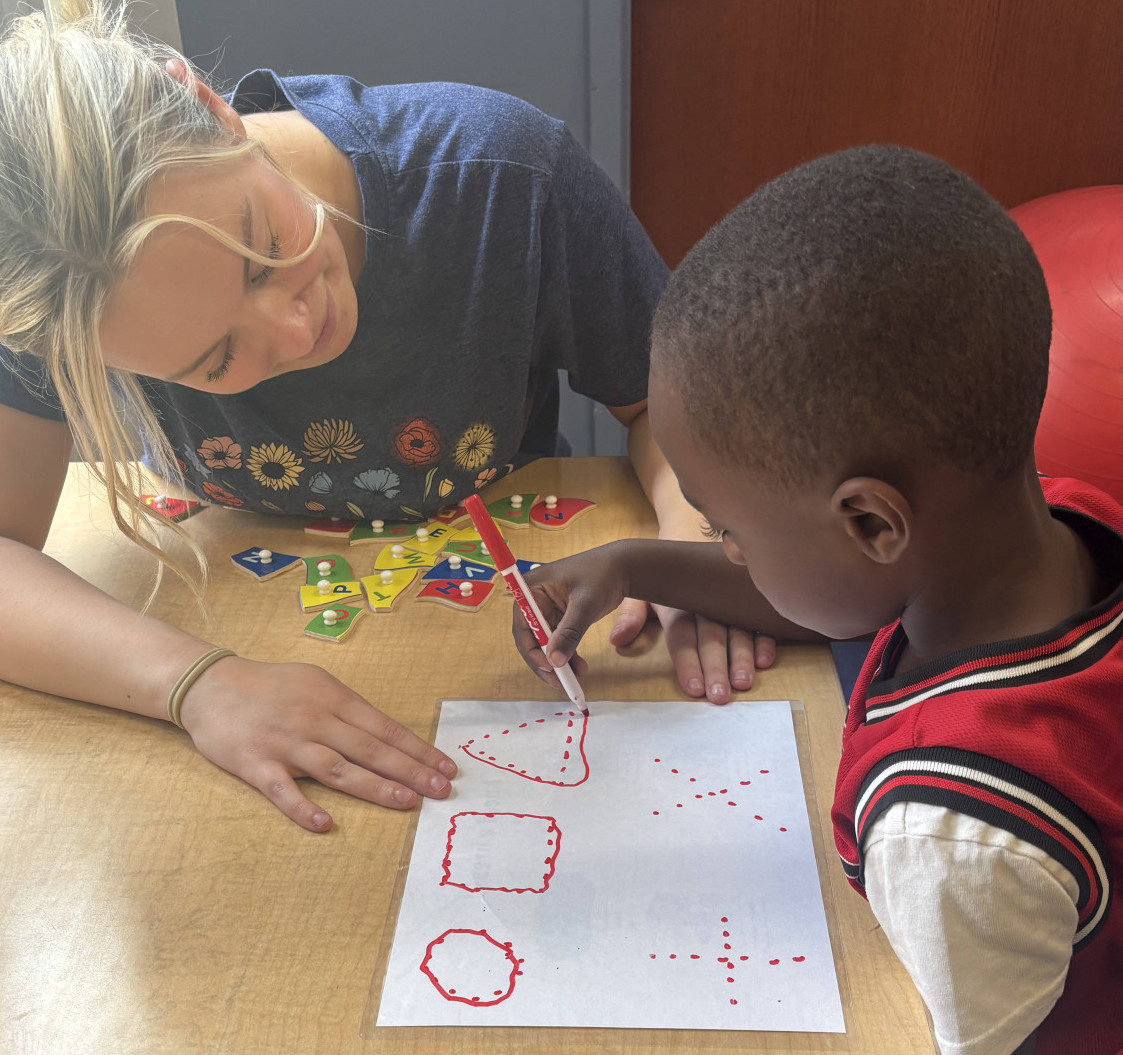
The OT evaluation is a mix of parent interview, observing your child through play and prompted activities, and if appropriate, administering a few assessment tools. Your OT practitioner will likely ask about your child’s day-to-day life, frequent routines, interests, and all of the things that they do to take care of themself and participate in everyday activities. Following the interview, you will see more play and/or interaction between your child and their OT. This interaction is an opportunity for your practitioner to observe your child’s fine motor skills, strength, coordination, social skills, and more in a natural setting. If appropriate, you may also see your child participating in an assessment or test.
Important Reminders
It is important to remember that these evaluations and assessments are not pass or fail. They are an opportunity to better learn about your child! Following the evaluation, if your child qualifies for services, your OT will create a treatment plan with goals to address any challenging areas or skills that are impacting your child’s participation and independence in daily activities.
If you have any questions or concerns during your child’s evaluation, make sure to ask them! Your OT is excited to partner with you and your family and assist your child in achieving new milestones and gaining confidence and independence.
For more information visit achievementcenters.org
