


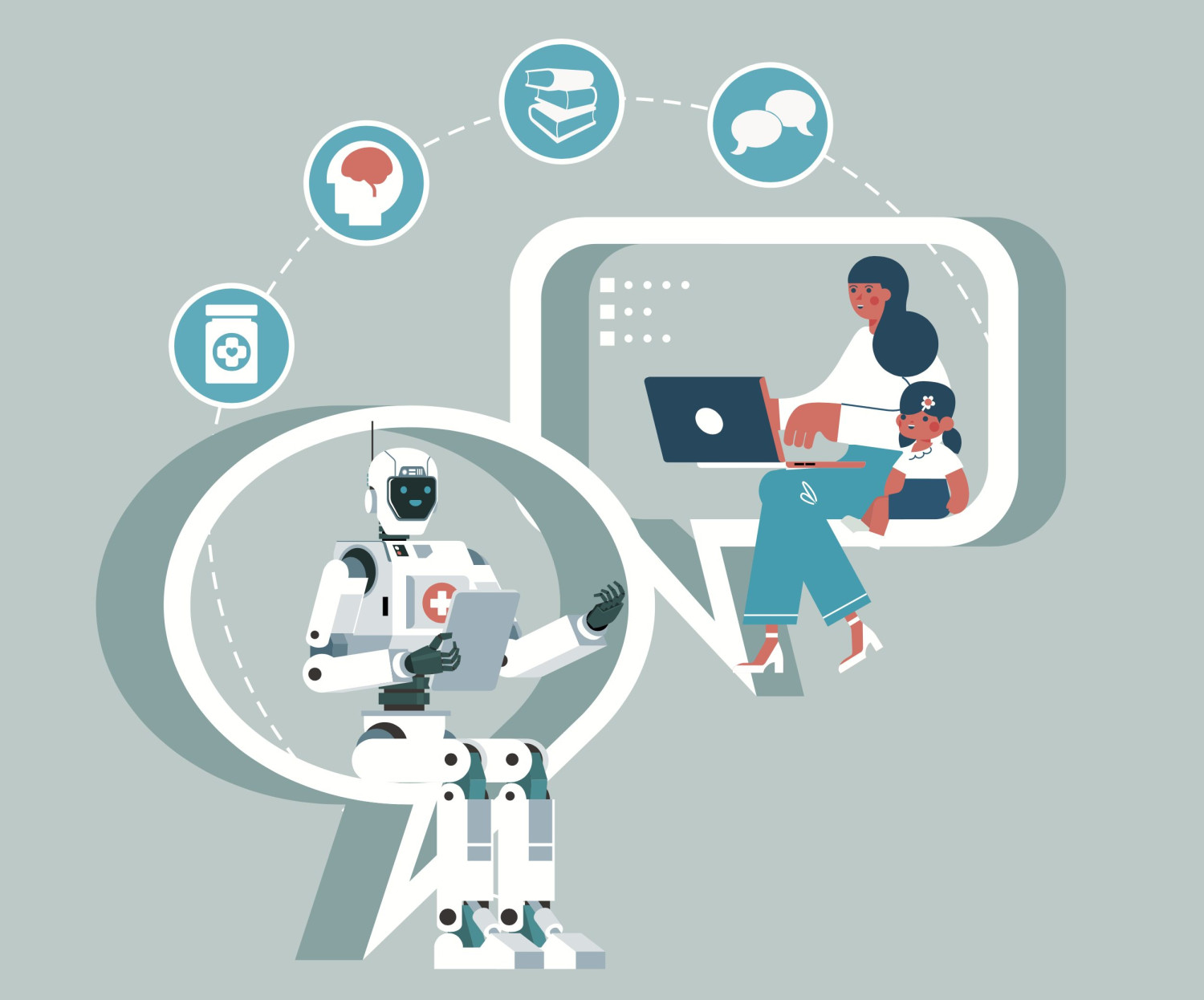
As artificial intelligence continues to grow, many parents find themselves turning to it for parenting advice. However, how reliable is AI? Can it be trusted to provide parenting advice?
Dr. Kimberly Giuliano, a pediatrician at Cleveland Clinic Children’s, says that parents can use AI as a “resource, but not for a definitive answer.” She believes that parents naturally go to a number of sources to find advice. This includes searching online, as well as talking to a few neighbors, friends, other parents and their pediatricians in order to get information and advice from several different sources.
“AI could be one of those sources that parents use, but just like any one of those other sources, if that’s where you put all of your trust, you certainly run the risk of utilizing advice that might not be the most appropriate thing for you or your children,” Giuliano says.
Check the Sources
Leah Fellenstein, LPCC-S, therapist at Abundant Life Counseling, says, “AI is designed to give you the most logical and contextually appropriate answer. It’s always going to be an answer that’s worded confidently. It’s not going to say ‘We think maybe that this is the answer.’”
The other challenge is that AI provides what seems to be a very firm answer, but parents may not have any idea of where the information was pulled from or how reliable that information is. AI can scan a variety of websites and create an answer based on the most popular statements, and then present that answer as factual, clear and concise — because that’s what AI is designed to do.
Another concern involves AI “hallucinations,” when it misinterprets information. Fellenstein says that parents “wouldn’t listen to someone else’s hallucinations about their children,” but that’s the concern with AI.
The system presents hallucinations as facts, but it’s not going to be highlighted as a hallucination, as this is something developers look for. The end users won’t know if they are receiving accurate information or not.
If parents decide to use AI as one of their sources for information, Giuliano recommends they check the provided sources, since the software often shows sources cited for information.
“Parents looking for advice on AI should dig deeper and click those links to some of the other sources,” she says. “This can help them to understand where that information came from, and if the AI companion used is interpreting the information correctly. Also, as parents read through those primary articles, they will understand if the information provided is pertinent to their children or not.”
This helps parents to better understand the information presented and the tone of those articles, and then decide if the advice provided is something that seems like a reasonable direction to go in.
In addition to digging into the sources, Fellenstein recommends a few more follow-up questions to the AI search:
- Is the information presented something that’s showing up in research on kids?
- Is this something that professionals are saying?
- Does it match other resources out there?
It’s really important to fact-check the information that AI provides, especially when it comes to parenting advice.
What Advice can Parents Use AI For?
Although it’s important to use AI with caution for parenting advice, there are things it can be helpful for.
Giuliano says AI can be used to help organize chore lists for your kids or come up with bedtime routines. AI can also be good for fairly common and relatively simple concerns that families have.
“The dangers come in when the information that parents are looking for concerns more sensitive or unusual issues, (such as those) that relate to children’s mental or behavioral health needs, or children with medical complexities,” she says.
In these situations, AI is not very good at interpreting context, and what works for some children in one situation might not work for other children in that situation.
“This is where the information could potentially start to go awry,” Giuliano adds.
How the Question is Worded Matters
Fellenstein cautions parents that while there are situations where AI could be helpful, the way parents word the question matters because it influences the response that AI provides.
“Parents should not take it as a complete answer, especially if it’s regarding their children’s mental health,” she says. “I have seen a lot of flaws in AI regarding mental health.”
The tone of the question also influences the response.
“If you say, ‘How could I approach this in a gentle manner?’ you’re going to get all very gentle answers, when sometimes a more direct approach might be what’s more appropriate for the situation,” Giuliano says. “Similarly, if you go in and ask, ‘What are all of the dangers of doing x, y or z?’ you’re going to get a list of all of the reasons that you shouldn’t be doing something one way, when perhaps maybe that would be within the children’s best interest. So it’s a little bit nuanced in terms of how you ask the questions, and then also the specifics related to your children.”
Use Your Child’s Pediatrician as a Resource
When looking for parenting advice, the pediatrician is a good resource.
“I think your child’s pediatrician is the best place to start, because the pediatrician typically has a relationship with both parents and children,” Giuliano says. “Pediatricians also understand the medical and developmental needs of the child, as well as what’s important to the family. The pediatrician can then help to either develop a plan directly with the parents or provide them resources to review different approaches — and ultimately find something that parents feel the most comfortable with.”
The benefit of pediatricians is that they can help parents “triage” the information found online, whether that’s from AI or a general internet search.
Parents Should Trust Their Gut
Fellenstein encourages parents to trust their gut.
“I think parents are more of an expert on their children than they realize,” she says. “Parenting is complex and every child is different. There are many books and resources available, but there isn’t a parenting book or an expert designed specifically for your child — and you, as the parent, will know your child best.”
This is why it’s important to go to multiple sources and then make a decision.
“If AI is one of the things you use, that’s fine,” Fellenstein says. “But it should just be a piece, not all of it. I don’t think any one thing should guide your parenting. Your kids are probably too complex for one book, one person’s opinion, or one professional’s understanding of your kids to encompass all of it.”
Giuliano adds, “AI is a tool that’s right at your disposal, so we should use it to some degree, but it’s not going to be the end-all, be-all we wish it would be.”
