


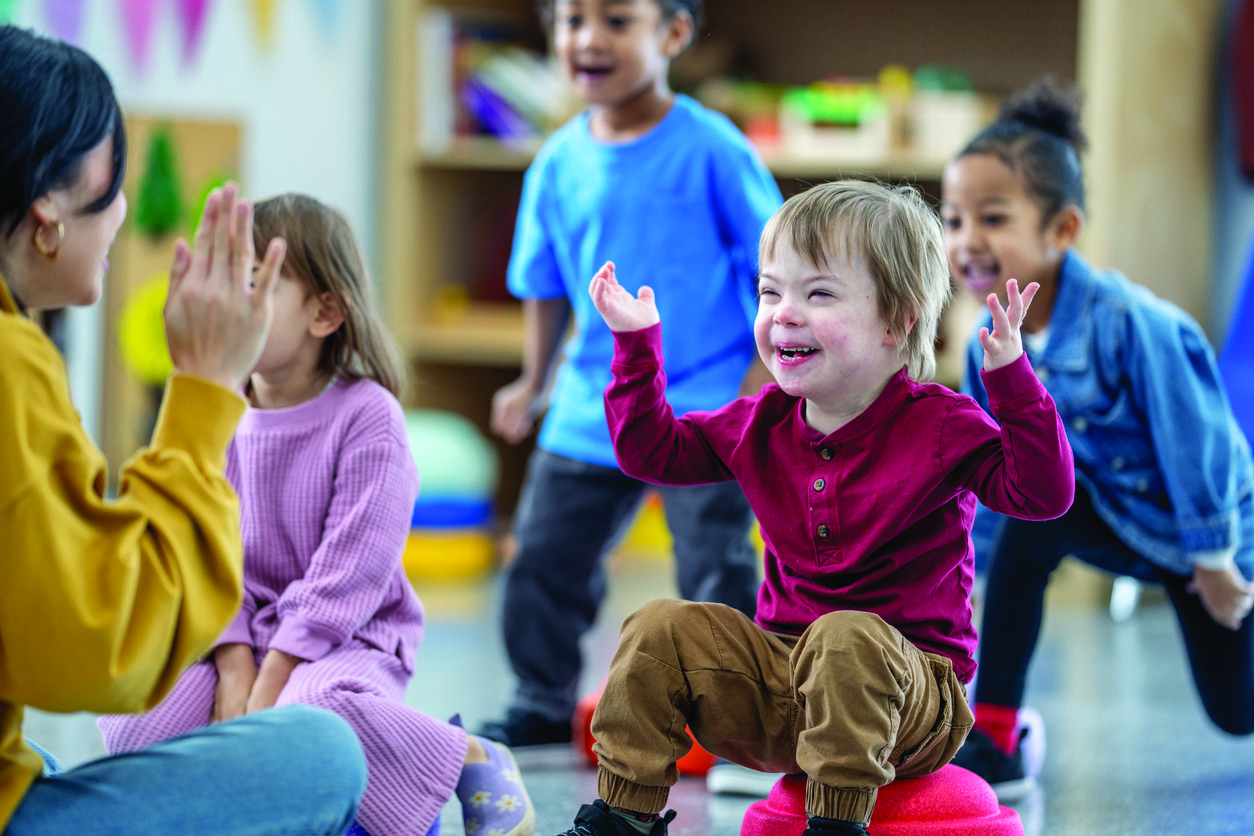
Given that this is a new experience for both families and children, Kelly Matthias, intervention specialist at Begindergarten from Julie Billiart Schools in Brecksville, says, “One thing I like to remind families is that every child’s (school) transition is unique and should be individualized. The goal is finding the environment where they can be successful and where their needs will be appropriately supported.”
Tonya Farran-Zaripheh, director/teacher at Middleburg Early Education Center, says this transition can be complicated because many children who “come to our preschool have never been in a daycare setting before.”
What should parents consider when choosing an Early Education Program?
Depending on their individual needs, there are a variety of options for children with disabilities who are transitioning to preschool or other early education programs. At times, this process can feel overwhelming for parents and caregivers, but Matthias encourages them to explore every option and ask as many questions as they need.
“As a parent or caregiver, you know your child best, so trust your instincts throughout the process,” she says.
When evaluating potential schools, she recommends scheduling tours, meeting faculty and staff, and observing different programs.
She adds evaluating these factors often provides valuable insight into what environment will be the best fit.
Farran-Zaripheh echoes these recommendations and suggests that parents also consider:
- Is this school able to follow your child’s IEP?
- Does the program incorporate therapies such as applied behavioral analysis (ABA)?
- What are their safety protocols?
- Is there an aide available?
- What is the student-teacher ratio?
- What is the experience of the staff?
- What does the school have in place for hands-on learning?
- Does the school have a way for the child to move his or her body?
- Is there a sensory room?
- How does the program communicate with families?
- Is there an open-door policy?
“We have an open door policy here at Middleburg Early Education Center, so parents are encouraged to visit and observe the classroom,” Farran-Zaripheh says. “We have windows where the parents can see into the classroom, but the children cannot see out.”
She recognizes this isn’t the case at all preschool programs, so if parents aren’t able to come in and observe, then especially for nonverbal children, pay attention to the child’s demeanor when it’s time to go to school and whether the child is happy to go or not.
What kinds of support are available for families?
The type of support available varies by the child’s age. Bright Beginnings/Help Me Grow is an organization that helps when children are under age 3. This program provides support for young children with developmental delays and disabilities. It can help with early childhood support and intvervention, such as developmental screening, connecting families with therapy providers or other community resources.
“When students are older than age 3, Matthias says, “some receive services through their local school district in an integrated preschool classroom, while others may attend specialized programs like Julie Billiart Schools that provide more individualized supports. The most important piece is early evaluation and open collaboration between families, therapists, educators and the school team, so supports are in place before the first day.”
Paying for a private or more specialized program can become costly. Farran-Zaripheh advises parents that financial assistance could be available. She recommends parents look into the Autism Scholarship Program (ASP) and The Jon Peterson Special Needs Scholarship Program (JPSN). In addition to resources provided through the state of Ohio, check with your local board of developmental disabilities, which might have resources or recommendations for support.
How can parents help prepare their child for preschool?
Prepare for separation. Practicing separation is an essential skill that helps with a successful transition into preschool. Farran-Zaripheh says for many children, this is generally their first school experience or first experience where a parent or grandparent isn’t providing the primary caregiving. Therefore, separation can be challenging.
Matthias shares a similar perspective: “As an intervention specialist at Julie Billiart, I’ve found that successful transitions happen when we intentionally prepare children ahead of time. Classroom visits, meeting teachers, using visual schedules and social stories, and maintaining consistent communication between home and school can make a tremendous difference in reducing anxiety, building confidence, and creating a sense of predictability for both the child and their family.”
Participate in community programs and activities. Community programs offer opportunities to help children with disabilities develop socialization skills. Involvement in these programs helps children learn to be around other children and adults, practice taking turns, follow directions, and build relationships.
For parents looking for additional community support, Farran-Zaripheh also recommends: Connecting for Kids, Beyond Words Music and Dance Center, and Achievement Centers for Children, as these resources provide more support, resources and socialization options.
Support movement and sensory needs. “Bilateral motions, motions that cross the midline of the body, help to support left and right brain development,” Farran-Zaripheh says. She adds that many children need to build up their core strength, which helps their bodies feel better and also helps to build strength to hold longer conversations.
Providing opportunities for more movement, such as building an obstacle course in the living room, crab walking, crawling and climbing helps children build strength and supports brain development.
Building independence. Farran-Zaripheh recommends parents, “allow their children to fail, try things for themselves and become more independent.”
She adds, “even in our youngest classrooms, we’re expecting our students to retrieve their own belongings and try to put their coat on. Parents naturally want to help their children, but it’s also important to help them know they are capable. This is how they are going to learn.”
The goal is to help them become more independent so they’re better prepared for group settings like preschool and, later, kindergarten.
“Kindergarten readiness isn’t just about knowing letters and numbers. It’s about developing those foundational prerequisite skills that allow children to be successful learners,” Matthias says. This is why building the foundation is important.
“At Julie Billiart’s Begindergarten program, we intentionally focus on building functional communication, establishing and following classroom routines, understanding expectations, developing social skills like sharing and conflict resolution, strengthening self-regulation, and increasing independence across all areas,” Matthias says. “These are the skills that allow students to access learning, build meaningful relationships, and thrive in a kindergarten classroom. We focus heavily on these foundational skills because they support long-term success both academically and socially.”
For children with special needs, preparation for preschool and choosing the school that best meets their family’s needs is an essential part of success.
“At the end of the day, I truly believe that a strong partnership between families and educators makes the biggest difference,” Matthias says. “When everyone is working toward the same goals, maintaining open communication, and celebrating each child’s individual strengths, transitions become much smoother and much more positive for everyone involved.”
