


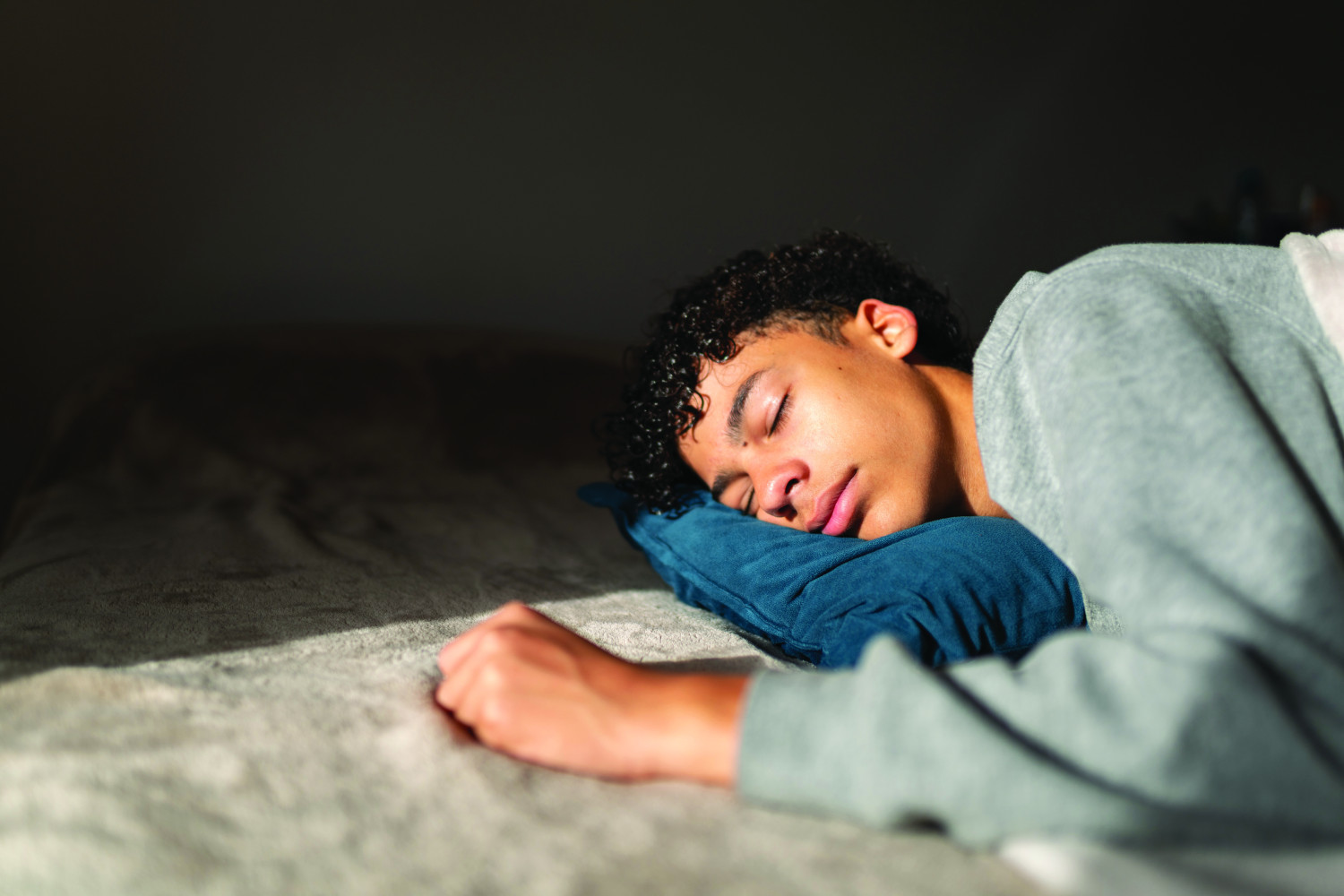
The alarm rings. You call their name, turn on the light and remind them that school starts soon. Five minutes later, they’re still asleep.
Before assuming your tween or teen is being lazy, consider what is happening inside their body.
“The morning fight to yank your teen out of bed has more to do with the mysteries of adolescent biology than with parenting,” says Dr. Brian Chen, a sleep medicine specialist at Cleveland Clinic. “Your teen isn’t being lazy — at least when it comes to getting out of bed in the morning.”
Our circadian rhythm is the body’s internal clock. During adolescence, the circadian system and the body’s buildup of sleep pressure change, pushing teens toward later bedtimes, according to a review of adolescent sleep biology.
“Puberty comes with many changes, including our circadian rhythm, which is our body’s internal clock that tells us when to be awake and have energy, as well as when to settle down and sleep,” Chen says. “During adolescence, our brains release melatonin, the hormone that signals sleep, later and later.”
That means a teen who appears wide awake at 9 p.m. may not simply be resisting bedtime.
“Asking a teen to fall asleep at 9 p.m.
can start to feel like asking an adult to go to sleep at 7 p.m.,” Chen says. “They won’t be sleepy.”
The problem is that school schedules don’t shift along with adolescent biology. When teens must wake up at dawn, they may still be in the middle of their natural sleep period.
“Forcing a teenager up at dawn pulls them out of bed right in the middle of their sleep period, when their core body temperature is at a minimum and cortisol is low,” Chen says. “In an adult, this would be like waking up at 4 a.m.”
Teens may remain less alert for hours, which isn’t ideal for morning classes and can be dangerous for those who drive to school.
Why can They Wake up for Things They Want to Do?
Many parents have seen that same exhausted teen jump out of bed before sunrise for a vacation, holiday or another exciting event.
“That is good old dopamine, the neurotransmitter of reward,” Chen says. “Dopamine is a wake-promoting chemical, and when people are excited for something, they can wake up more easily. This anticipation of a reward can also keep us from falling asleep the night before.”
How Screens and Sleep-Ins Backfire
Phones and gaming can make an already-delayed sleep schedule harder to manage.
“Screens double the trouble,” Chen says. “Blue light stops our brain from producing melatonin, which is already naturally delayed for teens. Furthermore, the world of fun and creativity that lives in our screens keeps our nervous system flowing with dopamine and adrenaline, keeping our brains awake longer.”
Common attempts to catch up on sleep may also backfire. Repeatedly hitting snooze breaks the final hour of rest into less-useful fragments. Staying up late and sleeping much later on weekends can disrupt the circadian rhythm, creating “social jet lag.”
How Parents can Make Mornings Easier
Chen recommends keeping weekend wake-up times within about an hour of the school schedule. In the morning, kids should get out of bed and spend 15 to 20 minutes in natural light.
Finally, give screens a bedtime. Chen suggests creating a centralized charging station outside the bedrooms and putting devices away at least an hour, and ideally two hours, before bedtime.
These changes may not make your teen cheerful at 6:30 a.m., but they could make getting out of bed a little easier.
