


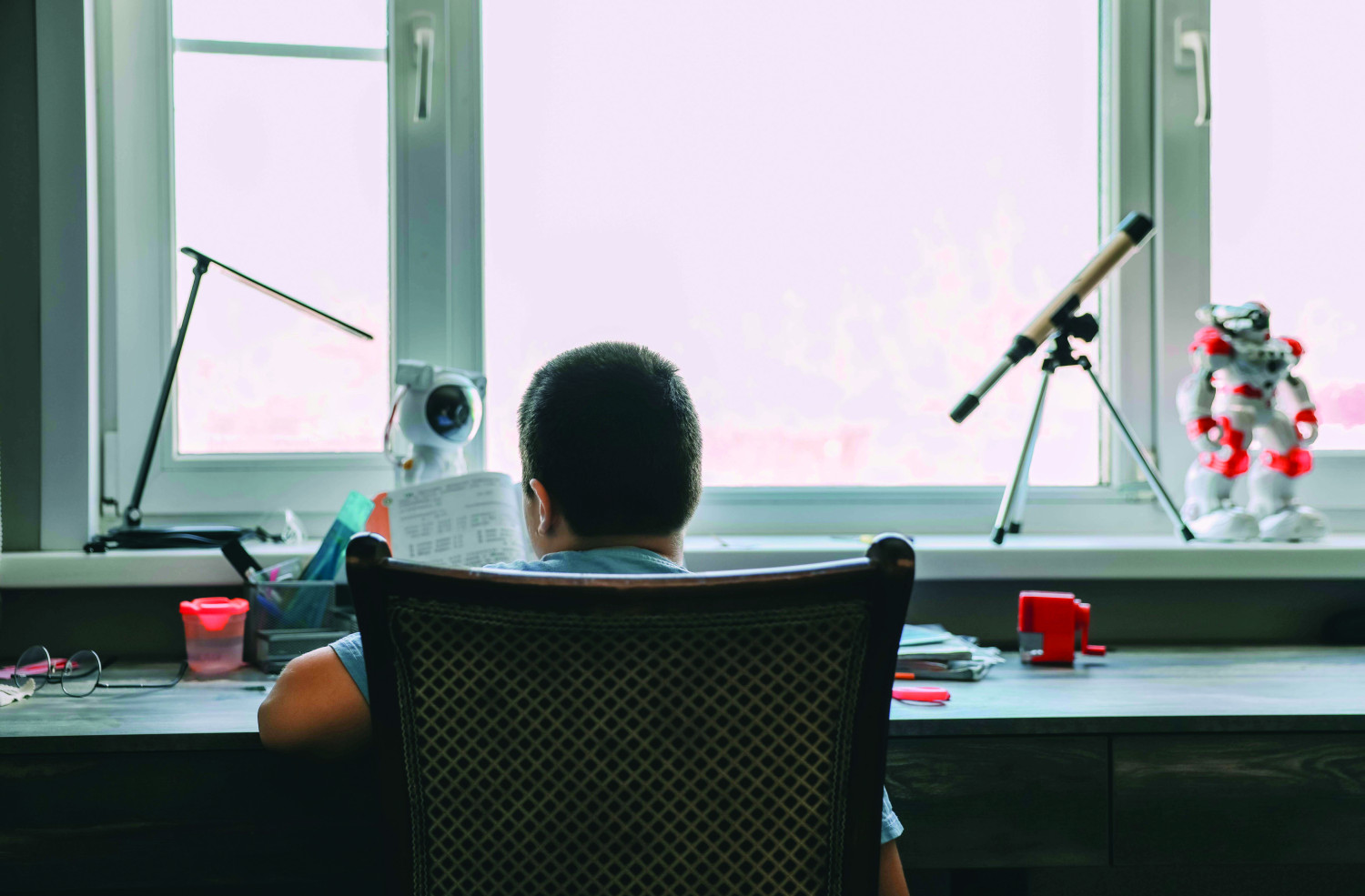
To address the growing emphasis on STEM (science, technology, engineering and mathematics) education in recent years, schools and libraries across the region have created dedicated areas to serve as makerspaces.
A makerspace is simply a place where kids can create, tinker, build and take things apart — essentially, they can explore how the world works in fun ways. When combined with sensory-rich activities — projects that invite kids to touch, pour, squeeze, twist, stack, mix and experiment — you create an environment where STEM learning feels more like play than work.
To build a great at-home makerspace, you don’t need a dedicated room or expensive equipment. All it takes is a few basic supplies and some ideas for hands-on activities to give kids a space that encourages curiosity, discovery and hours of fun.
Setting Up Your Makerspace
A home makerspace doesn’t have to be complicated, costly or even permanent. It can be as simple as a large plastic bin that gets brought out during “maker time.” You could also stock a rolling cart with makerspace supplies, enabling movement from room to room as space allows.
If you don’t have a spare room — let’s face it, not many families do — consider dedicating a corner of a multipurpose room like a basement or playroom to serve as a makerspace. When all else fails, just roll the cart up to the kitchen table when it’s time to experiment and create.
Aim for accessibility: when kids can see the materials, they’re more likely to use them. Start small by offering a mix of building, sensory and creating tools, then add new materials as your children discover what inspires them most.
Supplies Needed & Activities to Try
Below are five categories of supplies, each paired with a few hands-on activities that blend STEM concepts with creativity. These materials are easy to find, affordable and can be used for multiple activities across a wide range of ages. Together, they create endless opportunities for open-ended exploration and inventive play.
1. Building & Engineering Materials
What to gather:
Items such as craft sticks, toothpicks, cardboard pieces, paper, masking tape, rubber bands, straws, pipe cleaners, LEGOs or magnetic tiles, scissors, a hole punch, etc.
Sample activities to try:
Straw Rockets. Wrap paper around a pencil to make a tube shape, then tape it. Pinch and tape one end closed to make the nose. Cut out two paper fins and tape them to the bottom of your tube. Remove the paper tube from the pencil and slide it onto a straw. Blow through the straw to launch your rocket.
Cardboard Engineering. Build bridges, ramps or towers and test how much weight they can hold. Experiment with different materials, or manipulate the same materials — like folding or layering — to see how they compare.
Craft Stick Catapults. Use craft sticks, rubber bands and a plastic spoon to build a simple catapult. Kids can test how far different objects fly, compare angles and force, and tweak their design to improve their launch.
2. Sensory “Mix & Explore” Materials
What to gather:
Sand, rice, beans, baking soda, vinegar, droppers or pipettes, cornstarch, food coloring, measuring cups, funnels.
Sample activities to try:
Fizzy Excavations. Hide small toys in packed baking soda and give kids droppers of vinegar to “excavate” them.
Oobleck Lab. Mix cornstarch and water to create a substance that’s both liquid and solid. This is great for demonstrating states of matter. Add food coloring for a more vibrant twist.
Sensory Construction. Use spoons, cups and funnels to move around rice and beans. Take it a step further by mixing up homemade kinetic sand using sand, corn starch and baby oil — then shape buildings, carve roads, or test
how well different molds hold their shape.
3. Circuits, Light & Simple Electronics
What to gather:
LED lights, coin cell batteries, copper tape, flashlights, glow sticks, translucent plastic containers. (Supervise younger children with these materials, especially batteries.)
Sample activities to try:
Paper Circuits. Use copper tape to create simple electrical paths that light up an LED on a greeting card or drawing.
Shadow Play. Use flashlights to explore light and shadow, experimenting with distance and shapes.
Cardboard Light Maze. Build a simple maze inside a box and navigate it using a beam of light.
4. Art & Design Supplies
What to gather:
Washable paint, watercolor pencils, bubble wrap, air-dry clay, fabric scraps, feathers, foil, glue sticks.
Sample activities to try:
Bubble-Wrap Prints. Paint bubble wrap of varying sizes and press onto paper to reveal fun patterns.
Clay Impressions. Press textured objects — keys, Lego bricks, shells, etc. — into clay to examine patterns. When the activity is finished, kids can create fun sculptures to keep once they’re dry.
Texture Collage. Layer fabric, foil, paper and other materials to explore how different surfaces feel and look.
5. Nature-Based Materials
What to gather:
Sticks, rocks, leaves, flowers, pinecones, magnifying glass, small trays or containers, paper, crayons.
Sample activities to try:
Bug Hotels. Build tiny dwellings using natural materials collected outside.
Leaf or Bark Rubbings. Place natural textures under paper and use crayons to reveal hidden patterns.
Water Displacement Test. See which natural items float, sink, or change the water level the most.
Makerspace Tips
-Use clear bins with labels so kids can easily find materials.
-Place a washable tablecloth, tray or silicone mat on the work surface for quick cleanup.
Keep basics like tape, glue sticks, writing utensils and scissors in a central “tool caddy” that’s always within reach.
-Rotate supplies every week or two to spark new ideas and prevent boredom.
–Add a “maker gallery” shelf, clipboard wall or wire display to showcase finished creations.
–Store a trash can, wipes and an old towel nearby so cleanup becomes part of the process.
