


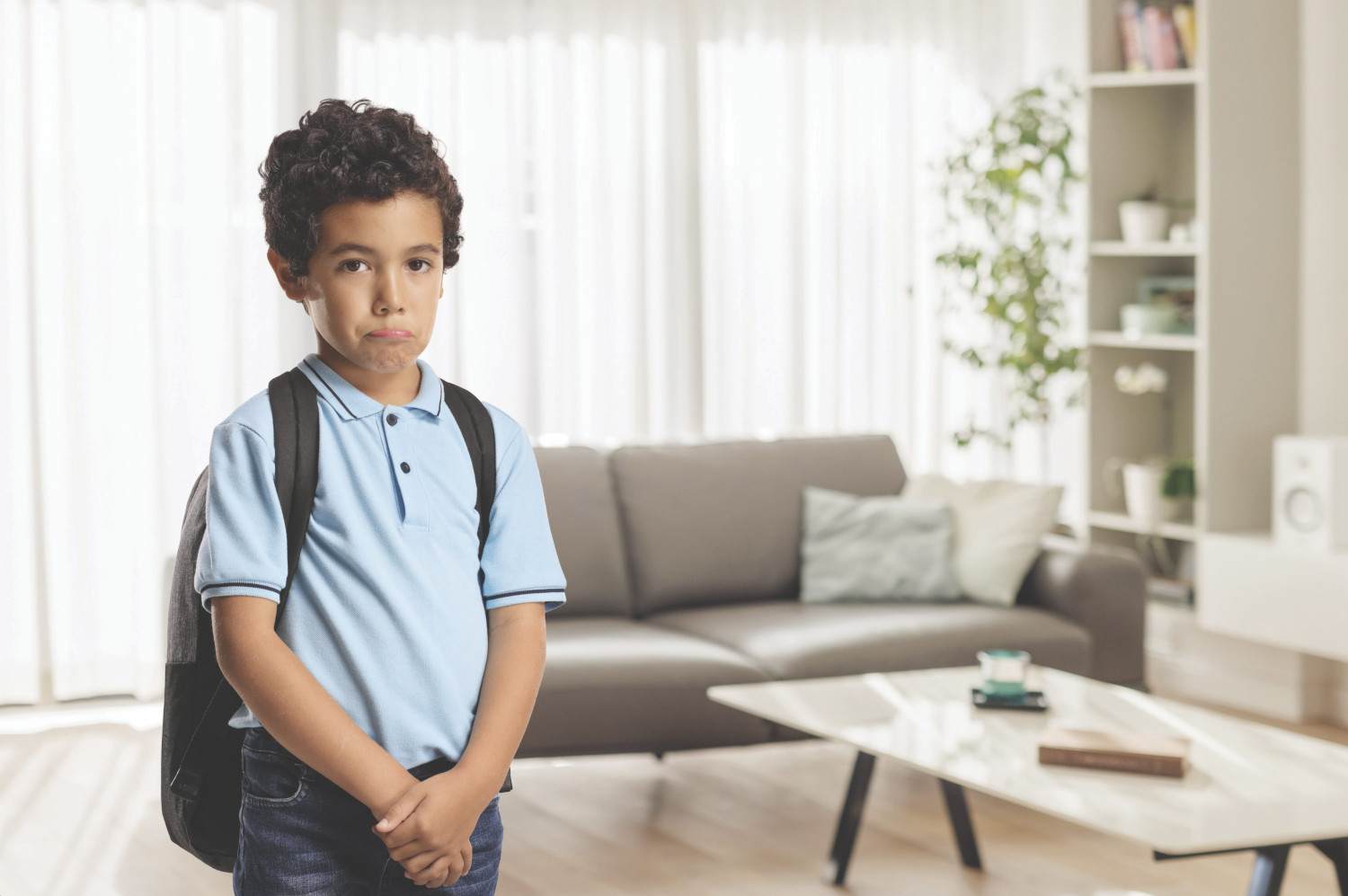
As summer comes to a close, families are navigating the transition from the more relaxed pace of summer break back into the structure of the school year. While the back-to-school season can be exciting, it can also trigger significant stress due to new sleep schedules, school nerves, separation anxiety, or even school avoidance.
The good news is there are things parents can do to help their children transition well into back-to-school routines.
Ease Into the New Routine
Summers tend to be more laid back for many families. Between longer daylight hours, later bedtimes and fewer academic expectations, the sudden arrival of school can feel overwhelming.
“When school starts back up, kids are not only adjusting to the change in routine, they are also adjusting to being back in an environment that requires more sustained focus, attention and higher mental demands,” says Leah Fellenstein, LPCC-S, therapist at Abundant Life Counseling. “For some families, summer means more family time so the start of school also can mean an adjustment to separating from family; this can be difficult, especially for younger elementary aged kids.”
Creating a new routine before it’s needed can be difficult. Parents can ease the challenge by framing the adjustment as a shared family goal rather than a rule imposed only on the kids.
Reframing Anxiety and School Avoidance
When a child tearfully resists going to school, a parent’s natural impulse is often to step in and remove the source of distress. However, Jensen emphasizes that anxiety itself is an appropriate, normal indicator that something is stressing the child.
“As difficult as this is for parents, that anxiety serves as a crucial warning sign,” she says. “Our goal as parents is not to get rid of anxiety. What we want to do is teach kids how to manage it and know when it’s telling them something useful or when it’s triggering an emotion that they can handle.”
When parents enable avoidance by letting kids bypass uncomfortable situations, Jensen warns that we inadvertently feed into that anxiety.
Fellenstein encourages parents to “get curious” about what is behind the feelings rather than assuming the child is simply being lazy or defiant.
“For some kids, school avoidance is rooted in anxiety or depression,” she says. “For others, they may be avoiding an overwhelming social or academic situation that feels or actually is unsafe. I think encouraging kids to explore what they are avoiding and why is helpful in creating a plan to confront the avoidance.”
Impact of Separation Anxiety
While separation anxiety is a typical developmental stage for toddlers, preschoolers and kindergarteners, it can also re-emerge during major school transitions.
Dr. Vanessa Jensen, a pediatric psychologist with Cleveland Clinic Children’s, explains that anxiety can occur when children start full-day programs, enter a new building, move into a grade where they do not yet know their classmates, or if they previously had school struggles.
“Children who are accustomed to one-on-one attention from a primary caregiver or who have previously struggled at school are particularly susceptible to separation distress,” Jensen says.
Fellenstein adds that separation anxiety isn’t limited to early childhood.
In older elementary students and teenagers, she says, “separation anxiety frequently occurs in conjunction with broader anxiety or other mental health concerns.” In these moments, being proactive is key.
She recommends that parents start small by practicing shorter periods of separation before the school year begins to gradually build the child’s tolerance.
Parents can also teach calming techniques such as grounding, deep-breathing and relaxation strategies at home so kids feel equipped to self-soothe after the initial upset of parting ways.
Fellenstein suggests providing quick tips directly to teachers or childcare workers regarding what specific techniques comfort your child when they feel overwhelmed.
Jensen recommends placing a small touchpoint, such as a family photo or a favorite tiny object, in a child’s backpack so the child feels connected throughout the day.
Validating Fear Without Reinforcing Avoidance
To balance empathy with encouragement, Elizabeth Viiberg, MSW, LSW, a licensed therapist, suggests validating a child’s emotions while communicating complete confidence in his or her ability to handle hard things.
She says parents can encourage their children by saying, “I hear your fear, and I know you are brave. We can do brave things while scared. How can we do that today?”
Viiberg also emphasizes celebrating the effort of facing a fear such as getting dressed or walking into the building rather than expecting a child to feel fearless.
“It is important for kids to learn that taking breaks is healthy, but there is a difference between a purposeful break that helps them recharge and avoiding responsibilities altogether,” Viiberg says.
Jensen advises parents to evaluate whether school avoidance is a brand-new reaction or a chronic pattern. This distinction is important because the approach will differ.
For new reactions, she suggests asking open-ended questions like:
- What are you worried about?
- What do you think might happen?
- What else might happen, and what might go well?
Simple steps like walking through the building beforehand or connecting with one classmate can build reassurance. On the other hand, for chronic patterns, Jensen recommends reviewing past report cards and teacher notes to check for academic struggles, social isolation or bullying.
Collaboration with the school is essential.
Fellenstein says parents should coordinate with teachers or guidance counselors “to help create a plan where the child can gradually increase his or her comfort and confidence in confronting the avoidance. Working with a counselor to build coping tools to manage emotions connected to avoidance can also be helpful.”
When possible, attend school open houses or meet the teacher days to help kids feel ready for changes in teachers or new buildings.
When contacting the school to discuss challenges or create a plan, Jensen reminds parents to be mindful in how they approach the situation because people “get more flies with honey than vinegar.”
Navigating Difficult Mornings and Bedtimes
Few situations test a parent’s patience like a child who refuses to get out of bed or get ready for school in the morning. During these high-stress moments, Viiberg advises parents to slow down and avoid turning the morning into a power struggle.
“Treating every difficult morning like a crisis can unintentionally increase a child’s anxiety,” Viiberg says. “Slowing down truly is key. Calling a child in late to school will not disrupt learning in the grand scheme of things. Teaching children to be dependable is valuable, but not at the expense of ignoring significant emotional distress.”
Instead of demanding compliance, Viiberg suggests asking open-ended questions such as:
- Can you help me understand what’s making today feel so hard?
- What’s the biggest part you’re worried about?
- What would make today feel a little easier?
If a child needs a mental health day to regulate, Viiberg notes that it can be appropriate if used intentionally to rest, identify the root problem, and create a plan for the next day rather than turning into a pattern of avoidance with unlimited access to screen time and luxuries.
Overlooked Triggers and Early Warning Signs
While academic demands are a common source of worry, there are also less obvious triggers driving a child’s desire to stay home.
Viiberg notes that “peer conflicts and friend group dynamics are among the most common, yet frequently dismissed, triggers for school avoidance.”
“Kids tend to like going to school to socialize rather than for academics,” she says. “Adults may dismiss friendship drama as a normal part of growing up, but experiences like exclusion or conflict within a friend group can make school feel emotionally overwhelming.”
Peer conflict isn’t the only commonly overlooked reason for school avoidance.
Viiberg cites academic performance pressure as another commonly overlooked reason for school avoidance because “when children tie their self-worth or their parents’ affection to good grades, school shifts from a place of learning to a source of threat.”
She also notes that strained interactions with school staff can impact a child’s experience at school.
Warning Signs of School Avoidance
Recognizing the early warning signs before school avoidance becomes an ingrained habit requires paying close attention to your child’s behavior.
“I think the biggest challenge for parents is that the early warning signs of school avoidance are sometimes nuanced by situations and can be difficult to distinguish from typical childhood behavior,” Viiberg says. “Even when there is no physical illness, anxiety can produce very real physical symptoms such as stomachaches, headaches, nausea or fatigue. Changes in behavior are important warning signs. Children who suddenly become more irritable, argumentative, withdrawn or emotionally reactive before school may be expressing distress they do not yet have the words to describe.”
Viiberg encourages parents to view behavior as a “translator” for feelings children cannot yet articulate.
“Kids frequently revert to an earlier stage of communication through their actions before they can express what they are feeling,” Viiberg says, adding, “This is a ‘can’t’ versus ‘won’t’ situation. They aren’t choosing not to tell you; they simply don’t have the skill yet.”
To build that skill, Viiberg cautions against accepting vague responses like “fine” or “bad,” which aren’t actual feelings. Instead, help children name specific emotions like nervous, pressured, shy or scared.
Managing Parent Anxiety and Promoting Resilience
Children are very perceptive and pick up on their parents’ emotional states long before feelings are spoken aloud.
Jensen cautions parents to separate their own feelings from their child’s, asking whether their stress stems from personal memories of school or lingering concerns from a previous year. Processing those feelings privately with a partner, friend or therapist keeps personal anxiety out of the child’s space.
To help children learn how to cope with school difficulty, Jensen suggests sharing “little stories” from your own childhood about times you felt nervous about school and worked through it.
When morning drop-off arrives, she recommends keeping farewells brief and confident. Saying things like, “I’m going to miss you so much every second” addresses the parent’s emotional needs rather than the child’s, hindering the child’s independence.
Viiberg adds that parents don’t need to pretend to be perfect, but should be mindful of how they speak about stress out loud. Replacing self-defeating statements with constructive self-talk such as “This is going to be a busy week, but what can we do to make it easier?” teaches children how to handle challenges in their own lives.
Ultimately, a successful return to school relies on basic, consistent foundations.
“Focus on the positives of school and encourage kids to identify what they can be grateful for in the school year,” Fellenstein says. “The brain finds what it looks for — and looking for positives, things to be excited for, and gratitude support a healthy mindset regarding school. By combining adequate sleep, unhurried routines, clear coping strategies and open communication with educators, parents can help their children step into the new school year with confidence.”
