


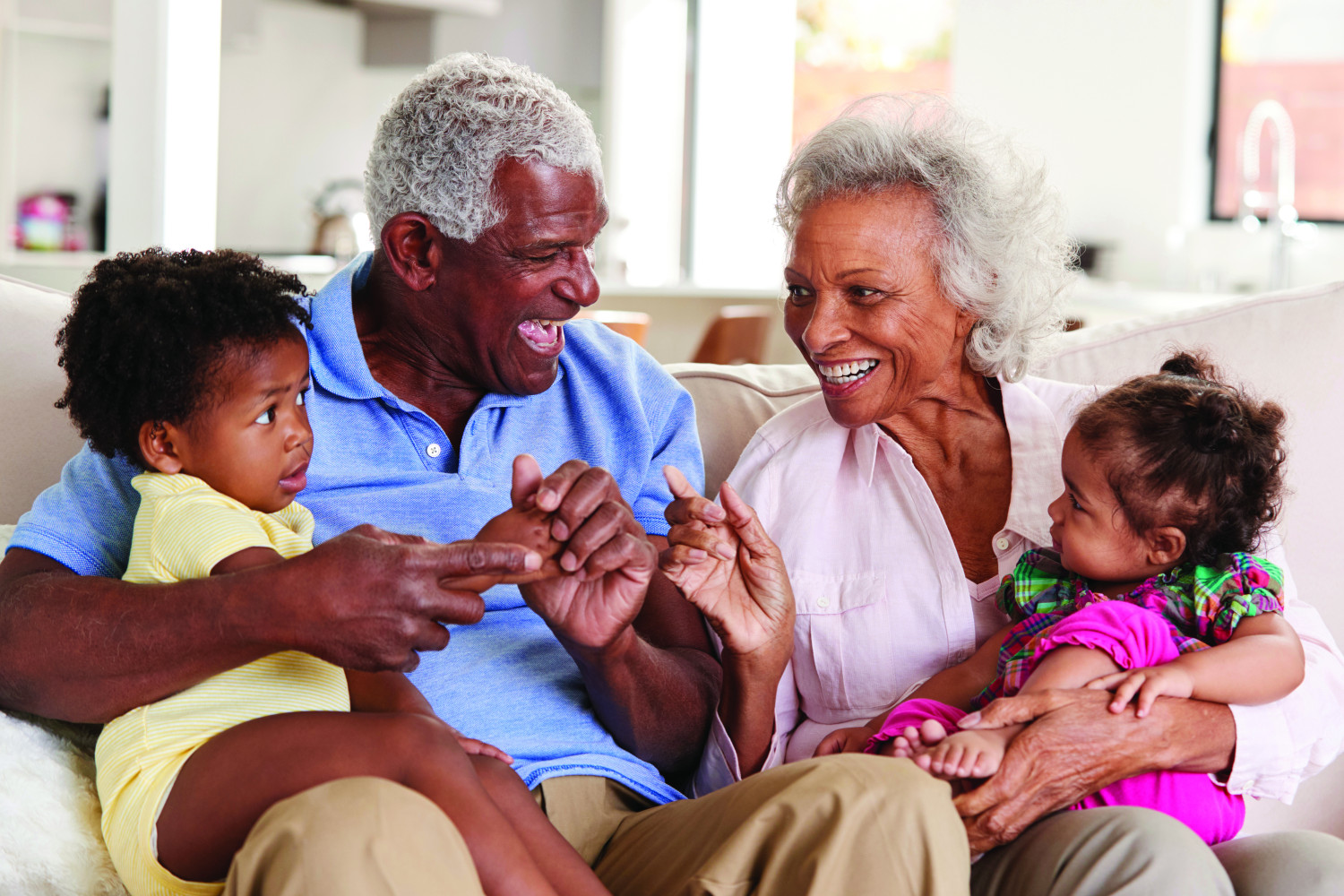
Due to changing economic conditions and life circumstances, some families are re-evaluating how they live and are considering multigenerational living arrangements where parents and grandparents live in the same household.
Dr. Carolyn Landis, licensed clinical psychologist and professor at University Hospitals Rainbow Babies and Children’s Hospital, says she sees many reasons why multigenerational living occurs. Some of these include economic reasons, job loss, a parent moving back in with parents after separating from their child’s other parent, or going back to school to further education.
“Sometimes it’s due to the grandparents’ need for more support because of health or other reasons,” she says.
Dr. Beena Persaud, psychologist at Cleveland Clinic adds, “The biggest reason recently is that childcare and living expenses are horrendous right now for working families.”
For some, the reason may be that they live in the same town as their parents and decided to combine households to economically help both generations — adult children and their parents.
Persaud has noticed a shift as well with the “middle generation” — those in their 40s who have young children and aging parents.
“You want your parents to spend more time with your young children,” she says, adding she also has seen families who are taking care of both young children and older parents, and these parents wanted to live in more of a family, collective-type household.
Benefits to Children for Multigenerational Households
Healthy multigenerational households can have a positive impact on children.
The vast majority of Landis’ patients are children, and she has noticed that those in multigenerational homes have benefited.
“The children have more people who love them,” she says. “Sometimes grandparents have a little more time than parents based upon whether or not they’re working. I’ve seen the grandparent being almost like a co-parent, where they are very involved and loving, and take the child to activities.”
This also helps to pass down family heritage and traditions.
“That’s something that grandparents can give you when you’re living with them,” Persaud says. “You might hear some stories when you go visit them once in a while, but it’s different when they’re cooking something and you’re there and you can hear stories of what it was like when they grew up.”
She shared how children could benefit from having a “secure attachment.” This is defined by the Cleveland Clinic as “the result of a caregiver consistently responding to their baby’s needs. The baby learns that the world is safe and people can be trusted.”
“You want children to be able to find safe people, and to learn how to navigate the world, emotionally and socially,” Persaud says. “Having a secure attachment with various age groups and lifestyles can help with that,”
The downside for children within multigenerational houses, according to Landis, is a much stronger grief and impact on the child when the grandparent dies, especially if the grandparent was like a co-parent.
“This doesn’t mean that they shouldn’t live there, but it just shows how close that relationship is,” she says.
Persaud adds, “I think it helps the child developmentally and understanding life stages. Because unfortunately, some of these younger kids are going to see their grandparents die. So understanding death, aging and sickness can help them socially develop, if it’s done in a proper way.”
Benefits to Parents for Multigenerational Households
Parents also benefit from healthy multigenerational households. Children now are typically in many activities in addition to school. Parents are managing their children’s schedules and homework while also working a full-time job. Persaud says, “Help with those things is beneficial.”
Landis adds that when the multigenerational living environment is healthy, it’s a “protective, supportive and helpful situation for the adult children. Having someone to help that you trust, that you know loves your children the way you do takes off a lot of stress from some parents.”
Benefits to Grandparents in Multigenerational Households
Grandparents also benefit from multigenerational homes.
“It’s so stimulating mentally,” Landis says. “The grandparent has to move and do more. It might be also more stressful, but it also calls on them to flourish and push themselves to do as much as they can. If they weren’t living with the children, they might be at home and be much less active.”
Multigenerational homes also help the generation emotionally.
Persaud adds, “The emotional perks among the grandparents is they are getting a sense of belonging, that they’re still wanted, identity, that they’re still contributing to a family. I think that helps a lot with emotional stability and reduces depression rates in a lot of the older adults.”
Also, the mental stimulation of helping in a multigenerational household can protect against dementia.
Persaud says that having interactions where “they’re constantly having to talk, do problem solving, plan and keep track of things uses their brain in various ways that can be very helpful cognitively to keep their mind going.”
Challenges that Can Occur
Despite the benefits of multigenerational homes, there are still challenges that exist.
Landis says she has seen conflict between different generations in managing the child’s care, finances and conflict around household management, cleanliness and division of household tasks.
There can also be an issue of “psychological crowding.”
Persaud says, “A good way to describe this is ‘heightened overstimulation.’ Stress is high. You have low patience and every little thing and noise becomes an annoyance to you.”
She adds that this could lead to a lot of resentment and passive aggressive behavior, because people feel like “they’re always in my space” or “they moved things that shouldn’t have been moved.” One of the ways to overcome this psychological crowding is for each person to have his or her own space.
Key Factors to Help Increase the Success
It’s important to understand and establish boundaries. Persaud says the adult parent and grandparents living in a multigenerational household aren’t in a parent-child situation anymore, but rather adults living together. This means that the adult parents need to understand where their independence is as well as where the older parents’ independence is. She advocates that roles need to be defined in:
-Handling daily activities and situations.
-Who’s going to do discipline, what will be disciplined, and how it will be handled.
-Who is going to do the childcare and when. Help is voluntary and requested, not assumed. Parents should ask and not assume that the grandparents will watch the children. Grandparents should be able to decline and not feel guilt.
-Household chores.
-How decisions will be made.
-How household finances will be managed and who is responsible for what.
Persaud also cautions grandparents to avoid saying things like, “You should be grateful for the help that I’m giving you.” These comments can build resentment. Grandparents should also avoid offering a lot of unsolicited advice or undermining the parents.
Dealing with Disagreements
Communication and respect are essential. Persaud views this similarly to couples therapy. She says that the key is to decide in advance how to deal with a confrontation. She recommends:
Take time to cool off before having a conversation. Then come back together and have a conversation away from the stressful situation.
Parents and grandparents should present a united front and not have disagreements in front of the kids.
Using “I” or “you” can make people very defensive. Saying “we” feels more unified, and it could help emphasize having the same goal.
Use the sandwich technique. Start with something positive, then state the criticism, then conclude with something else positive.
Be flexible. Recognize that people change and situations can differ, so we need to be flexible in handling conflict.
Bring up and deal with issues as quickly as possible.
There’s so many areas for potential disagreement.
“If grandparents and parents can come to an understanding that they might not agree, but as long as the child is not being harmed, then as it is with children, the adults have to pick their battles,” Landis says.
Persaud adds, “The adult parents have the final say over what is going on with their children, and the grandparents have a supportive role.”
Protecting Your Village
When you have a healthy village, it’s important to protect it.
Landis says that she has noticed a “worrying trend” of no contact between parents and grandparents. This is when an adult child cuts off all contact with parents. This can be because of a serious situation, but it also occurs over non-egregious situations, like something that the adult child doesn’t agree with politically or feelings that the parents are not being 100% supportive.
She adds that it’s concerning for the children down the road because they would miss out on a relationship with people that might have different cultural beliefs, different ways of being in the world, and people that can tell stories of their family and childhood.
“I hope that this trend reverses itself and adult parents realize the treasures that grandparents can be to their grandchildren,” Landis says.
One of the challenges Persaud has seen when adult parents don’t have their parents anymore, whether through death or no contact, is they now have to build their own village.
She has seen the “stresses it puts on people to find their village, because it is hard to do it on your own whether you’re a single mom, single dad, or two parents.”
“It’s hard to do it alone,” she says.
